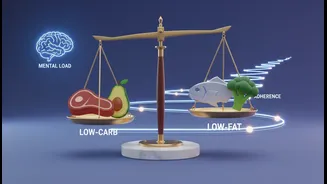








The Endless Cycle of Trendy Diets
For decades, the wellness landscape has been dominated by a revolving door of popular diets. Each one arrives with celebrity endorsements, compelling before-and-after photos, and a set of rigid rules. From the low-fat craze of the 90s to the current focus
on low-carb, high-fat plans, these trends promise a magic bullet for weight loss and health. Yet, for most people, the results are temporary. Studies have shown that the restrictive nature of fad diets makes them difficult to maintain long-term. This often leads to a cycle of dieting, weight loss, and subsequent weight regain—sometimes leaving individuals heavier than when they started. Experts caution that these diets can even be counterproductive, potentially leading to nutrient deficiencies, muscle loss, and an unhealthy relationship with food.
What the Research Says
A growing body of evidence is shifting the conversation from which diet is 'best' to what factors predict long-term success. The consistent answer is adherence. A landmark study in JAMA compared four distinct popular diets—Atkins (low-carb), Zone (macronutrient balance), Ornish (very low-fat), and WW (calorie control)—over a year. The findings were revealing: there was no significant difference in weight loss among the diets. The single biggest predictor of success was simply sticking with the plan. More recent analyses have reinforced this, showing that whether a diet is low-fat or low-carb, success is linked to a combination of adherence and overall diet quality, emphasizing whole foods over processed ones. This suggests the focus on a specific dietary dogma might be misplaced.
Why 'Lifestyle Fit' Is the Real Key
The concept of 'lifestyle fit' moves beyond mere adherence to explain why some eating patterns are more sustainable than others. It's about finding an approach that integrates seamlessly into your life. This includes considering your budget, cooking skills, work schedule, social life, and personal food preferences. A diet that requires expensive ingredients, hours of meal prep, or cutting out foods you enjoy at social gatherings is unlikely to last. By contrast, a personalized approach that respects your individual needs and circumstances is one you can maintain without feeling constantly deprived or stressed. Experts suggest this personalized method, which considers everything from your metabolism to your environment, leads to better, more sustainable health outcomes.
From Restriction to a 'Lifestyle' Mindset
Shifting from a diet mentality to a lifestyle approach involves a fundamental change in perspective. Instead of focusing on foods to eliminate, the goal becomes adding more nutritious ones, like fruits, vegetables, and lean proteins. Rather than aiming for rapid, dramatic weight loss, the focus is on creating small, consistent habits that build over time. This might mean swapping sugary drinks for water, adding a walk to your daily routine, or ensuring you get enough sleep—all of which play a role in long-term weight management. Research from the National Weight Control Registry, which tracks thousands of people who have successfully maintained weight loss, shows that common habits include regular physical activity (like walking), self-monitoring, and eating a balanced diet. They prove that long-term success is built on a foundation of sustainable lifestyle changes, not short-term deprivation.
How to Find Your Own Fit
Finding a sustainable eating pattern is a personal journey, but there are some universal starting points. First, pay attention to how different foods make you feel, noting what gives you energy and what leaves you feeling sluggish. Second, focus on 'approach-oriented' goals, like 'eat vegetables with every meal,' rather than 'avoidance' goals like 'never eat carbs.' This fosters a positive relationship with food. Consider a well-researched, flexible eating pattern like the Mediterranean or DASH diet, which are consistently ranked high for health benefits and sustainability. Finally, don't be afraid of trial and error. The goal is not perfection, but progress. Finding a way of eating that supports your health and that you genuinely enjoy is the most reliable recipe for long-term success.