






Beyond Bricks and Mortar
Traditionally, designing a building was a discipline governed by physics and finance. Architects and engineers focused on a clear set of non-negotiables: Is the structure safe? Does it meet building codes? Does it meet building codes? Will it be completed
on budget? These questions, rooted in the tangible world of stress tests and material strength, formed the blueprint of construction. The human experience within these spaces was often a secondary consideration, a soft factor in a world of hard numbers. Occupant comfort, if considered at all, was addressed through rudimentary heating and cooling systems, not as a core design principle. This approach created buildings that were functional shells, but not necessarily pleasant or productive environments to live and work in.
Quantifying Comfort
The major shift underway is the new ability to treat comfort not as a vague, subjective feeling, but as a set of measurable data points. This 'comfort data' encompasses a wide range of environmental factors that directly impact our well-being and productivity. Key metrics include thermal comfort (temperature and humidity), indoor air quality (CO2 levels and pollutants), acoustic performance (noise levels and distractions), and visual comfort (lighting levels and access to natural daylight). By capturing and analysing these elements, designers can move beyond assumptions and begin to engineer environments that are scientifically calibrated for human thriving. The goal is to create spaces that don't just avoid being uncomfortable, but actively enhance concentration, health, and overall satisfaction.
The Rise of the Digital Twin
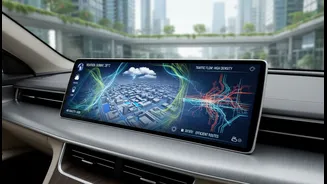
This new paradigm is made possible by sophisticated technologies like Building Information Modeling (BIM) and Digital Twins. A Digital Twin is a dynamic, virtual replica of a physical building that is continuously updated with real-world data from IoT sensors. Think of it as a live blueprint that simulates not only the building's structure but also its internal environment and operations. This allows architects and facility managers to run complex simulations before and after construction. They can model how sunlight will move through a space during the day, predict temperature fluctuations, simulate airflow patterns, and analyze energy consumption with incredible precision. By combining these comfort simulations with traditional structural calculations, designers can foresee and solve problems, such as an office that overheats every afternoon or a conference room with poor acoustics, long before they affect actual occupants.
Smarter Buildings, Healthier People
The real-world benefits of this integrated approach are significant. For building owners and developers, designing for comfort leads to more valuable and desirable properties. Buildings that can prove they offer a healthier and more productive environment are more attractive to tenants. For occupants, the benefits are even more direct. A well-lit, quiet space with clean air and a comfortable temperature can lead to improved focus, reduced stress, and better overall health. Furthermore, these smart systems often lead to greater energy efficiency. A digital twin that can predict occupancy patterns and weather forecasts can optimize the building's heating, ventilation, and air conditioning (HVAC) systems in real-time, reducing energy waste and operational costs significantly. Some analyses suggest potential energy savings of up to 30%, a compelling incentive for both sustainability and the bottom line.
The Future of Indian Urbanism
In the context of India's rapid urbanization and booming construction sector, this human-centric approach to design holds immense potential. As new cities are planned and existing ones expand, integrating comfort data into the core of architectural planning can lead to the creation of more liveable and sustainable urban environments. For the commercial real estate market, offering enhanced occupant well-being can become a key differentiator in a competitive landscape. In residential spaces, it means building homes that are not just shelters, but sanctuaries designed for health and happiness. The technology allows for a shift from a one-size-fits-all approach to creating environments that are responsive and adaptable, a crucial factor in a country with diverse climates and needs. The challenge and opportunity for India's developers and architects will be to embrace these new tools to build the next generation of infrastructure.