



Invest in Timeless Brassware
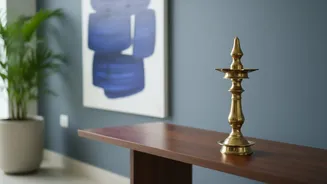
Traditional brass items are central to Onam decor, and their biggest advantage is their longevity. A beautiful Nilavilakku (traditional lamp) or a statement Uruli (a wide, shallow vessel) doesn't need to be stored away. These pieces are symbols of prosperity
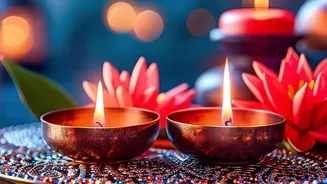
and purity, and their warm, golden glow adds elegance to any room year-round. Instead of buying them just for the festival, think of them as an investment in your home's aesthetic. A brass Uruli can be filled with water and floating flowers for Onam, and then used as a chic fruit bowl or a base for a potted plant for the rest of the year. Similarly, smaller brass diyas and bowls can be grouped on a coffee table or shelf to create a warm, metallic accent that complements modern and traditional interiors alike.
Rethink the Pookalam for Sustainability
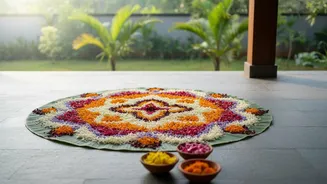
The Pookalam, or floral carpet, is the vibrant heart of Onam decorations. While traditionally made with fresh flowers that are disposed of daily, you can adopt a more sustainable approach. Instead of creating the entire design with petals, consider a permanent or semi-permanent base. You could use a large, flat terracotta plate, a wooden board, or even a rangoli mat as your canvas. This allows you to create a smaller, more manageable fresh flower design in the centre each day. For a truly long-lasting option, you can create a Pookalam using coloured rice, pulses, or even reusable fabric petals. Another idea is to build your design around small potted plants, which can be integrated back into your home garden after the festival.
Choose Versatile Textiles
The iconic Kerala Kasavu fabric, with its simple white and gold design, is elegant and adaptable. While central to festive attire, it can also be a beautiful part of your home decor. Instead of buying single-use items, look for cushion covers, table runners, or throws in Kasavu-inspired designs. These pieces add a festive touch for Onam but are subtle enough to be used throughout the year, adding a touch of understated elegance to your living room or bedroom. You can also repurpose old silk sarees with beautiful borders as drapes, table covers, or backdrops, giving them a new life and infusing your space with colour and personal history.
Embrace Earthy Terracotta
Terracotta, or baked clay, connects us to the earth and is an eco-friendly choice for decorations. Instead of plastic lights, consider using handmade terracotta diyas for a warm, traditional glow. These are not only economical but also biodegradable. After Onam, these diyas can be used for other festivals or as small holders. Larger terracotta vessels and pots can be used to hold banana fronds or flowers during the celebration and then become stylish planters for your indoor greenery afterwards. Their rustic, earthy tone provides a beautiful contrast to the gleam of brass and the vibrancy of flowers, creating a balanced and natural look.
Opt for Natural and Reusable Elements
Much of traditional Onam decor is inherently eco-friendly. Banana leaves, used to serve the Sadya feast, can also be used as natural, biodegradable table runners or placemats. Thorans, or door hangings, can be made from real mango leaves and marigolds, which can be composted later. When you do need something more permanent, consider wooden items like carved elephants or decorative bowls. These handcrafted pieces add a touch of heritage and can be displayed as art objects throughout the year. The key is to shift your mindset from disposable decor to a collection of beautiful, meaningful objects that tell a story and grow with you through many celebrations.