







The 'Sugar-Free' Promise
Walking down a supermarket aisle in India, the 'sugar-free' label is a comforting sight for the health-conscious. From diet colas to 'diabetic-friendly' mithai, these products promise sweetness without the consequences of sugar. Legally, the Food Safety
and Standards Authority of India (FSSAI) permits a 'sugar-free' claim if the product contains no more than 0.5 grams of sugar per 100g or 100ml. This sounds straightforward, but it’s the beginning of the story, not the end. The claim simply means traditional sugar (sucrose) is absent or minimal. It doesn't mean the product is free from other sweetening agents or carbohydrates that can still impact your body and blood sugar levels.
Meet the Sweetener Family
To achieve a sweet taste without sugar, manufacturers turn to a wide array of substitutes. These fall into several categories. Artificial sweeteners like aspartame, sucralose, and acesulfame potassium are common. Then there are sugar alcohols, identifiable by names ending in '-ol' such as sorbitol, maltitol, and erythritol. These are often found in sugar-free gums, candies, and baked goods. Natural sweeteners like stevia have also become very popular. While these substitutes don't contain the same calories as sugar, they are not all created equal. Some, like sucralose and aspartame, can be used to make traditional Indian dairy products like basundi and burfi, but their stability at high temperatures can be a challenge.
The Hidden Impact on Health
A 'sugar-free' product isn't automatically a 'healthy' product. Some sweeteners can have unintended effects. For instance, sugar alcohols like sorbitol and mannitol can cause digestive issues like bloating and diarrhoea if consumed in large amounts. While these substitutes are designed to have a minimal impact on blood glucose, making them popular for people with diabetes, a product's total carbohydrate content still matters. A sugar-free biscuit, for example, is still made with refined flour (maida), which your body converts into glucose. The overall nutritional profile of the food—its calories, fat content, and fibre—is just as important as its sugar content.
How to Read Labels Like a Pro
The front of the pack is marketing; the back is where the facts live. First, ignore the claims and go straight to the ingredient list. Ingredients are listed in descending order by weight, so whatever comes first is the most prominent. If you see refined flour (maida) or palm oil at the top, you know what the product is mainly made of. Second, learn the many aliases for sugar and sweeteners. Look for words ending in '-ose' (sucrose, fructose), syrups (corn syrup, glucose syrup), and the '-ol' family of sugar alcohols. Third, check the 'Total Carbohydrate' and 'Total Sugar' values on the nutrition panel, not just the 'Added Sugar'. This gives you a complete picture of how it might affect your blood sugar.
Beyond the 'Sugar-Free' Halo
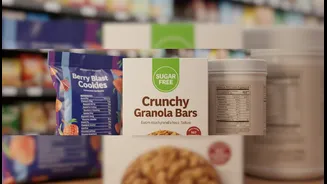
It’s easy to fall for the 'health halo' effect, assuming a product is entirely virtuous because of one positive claim. A 'sugar-free' cookie is still a cookie. A 'diet' soda, while free of sugar, offers no nutritional benefits. The alternative is not to fear these products, but to be mindful. Differentiating between 'sugar-free' and 'no added sugar' is also crucial. 'No added sugar' means no extra sugar was put in during processing, but the product might still be high in natural sugars, like a fruit juice made from concentrate. The smartest approach is to prioritise whole, unprocessed foods. When you do opt for packaged goods, use your newfound label-reading skills to make an informed choice that aligns with your health goals, rather than a choice based on a catchy front-of-pack slogan.