




Impact on Your Joints: High Energy vs. Low Strain
The most significant difference between the two lies in impact. Traditional aerobics, especially high-impact variations, involves running, jumping, and dynamic movements on a solid floor. While effective, this can put considerable stress on your ankles,
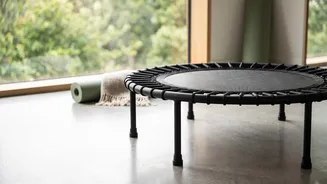
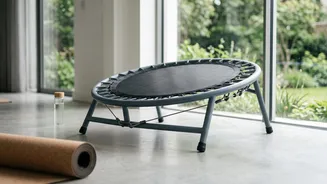
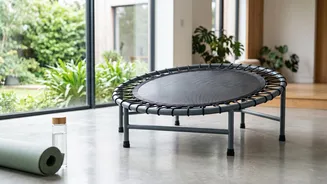
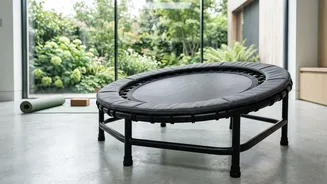
knees, and hips. For those with joint pain, a history of injury, or who are just starting their fitness journey, this can be a major barrier. Trampolining, on the other hand, is a low-impact exercise. The trampoline mat absorbs a majority of the landing force, protecting your joints from repetitive strain. This makes it an excellent option for nearly all fitness levels, including older adults or individuals recovering from injuries, allowing for vigorous cardio without the associated pounding.
The Calorie Burn Conversation
Both activities offer a fantastic cardiovascular workout capable of burning a significant number of calories. A step aerobics class can burn roughly 9.6 calories per minute. Trampolining is comparable, with studies and estimates showing a burn rate anywhere from about 7 to 12 calories per minute, depending on the intensity of the workout and your body weight. Some research suggests that 10 minutes of bouncing can be as effective for cardio as a 30-minute run. While high-intensity aerobics might have a slight edge in pure calorie-torching potential for some, the 'fun factor' of trampolining often leads people to exercise for longer, ultimately burning more calories over time simply because they enjoy it more.
Beyond Cardio: Muscle Tone and Hidden Benefits
Aerobics is renowned for building lower-body strength, particularly in the quads, hamstrings, and glutes. The choreographed movements also improve coordination and balance. Trampolining offers a surprisingly full-body workout. The unstable surface forces your core and stabilizer muscles to engage constantly just to maintain balance. Furthermore, rebounding has a unique benefit: it stimulates the lymphatic system. This network, which helps remove toxins and waste from your body, has no natural pump and relies on movement. The up-and-down motion of bouncing can increase lymph flow by up to 15 times, which aids in detoxification and can reduce inflammation.
Accessibility, Cost, and Convenience
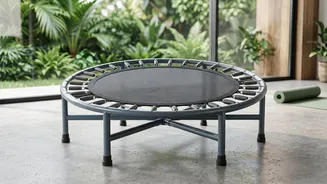
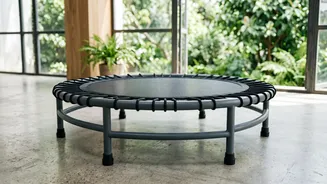
Aerobics holds a clear advantage in accessibility. You can do it almost anywhere with minimal equipment—a good pair of shoes is all you need to start. Countless free videos are available online, and classes are a staple at most gyms. Trampolining requires specific equipment: a mini-trampoline or rebounder. While prices vary, a quality rebounder is an investment. However, once you have one, it offers incredible convenience for at-home workouts, regardless of the weather. They are compact and many models can be folded for easy storage.
Making the Choice: Which Is Right for You?
Choosing between aerobics and trampolining depends entirely on your personal context. Choose Aerobics if: You are looking for a high-intensity, structured workout, enjoy choreographed routines, want to build significant lower-body power, and need an option that requires minimal equipment to start. It's great for those without joint issues who love a classic, high-energy group class vibe. Choose Trampolining if: You need a low-impact exercise due to joint sensitivity, arthritis, or are returning from an injury. It's also ideal if you're looking for a fun, less conventional workout that improves balance and core strength while providing unique benefits like lymphatic drainage. It is suitable for all fitness levels, from beginners to advanced athletes.