

A Game of Cosmic Hide-and-Seek
For more than 10 years, a giant planet played an incredible game of hide-and-seek with humanity. Located 63 light-years away in the Beta Pictoris system, this world, now named Beta Pictoris d, remained invisible, lost in the overwhelming brightness of its
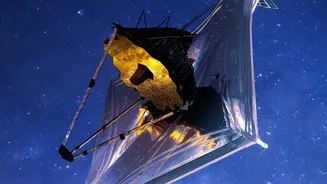
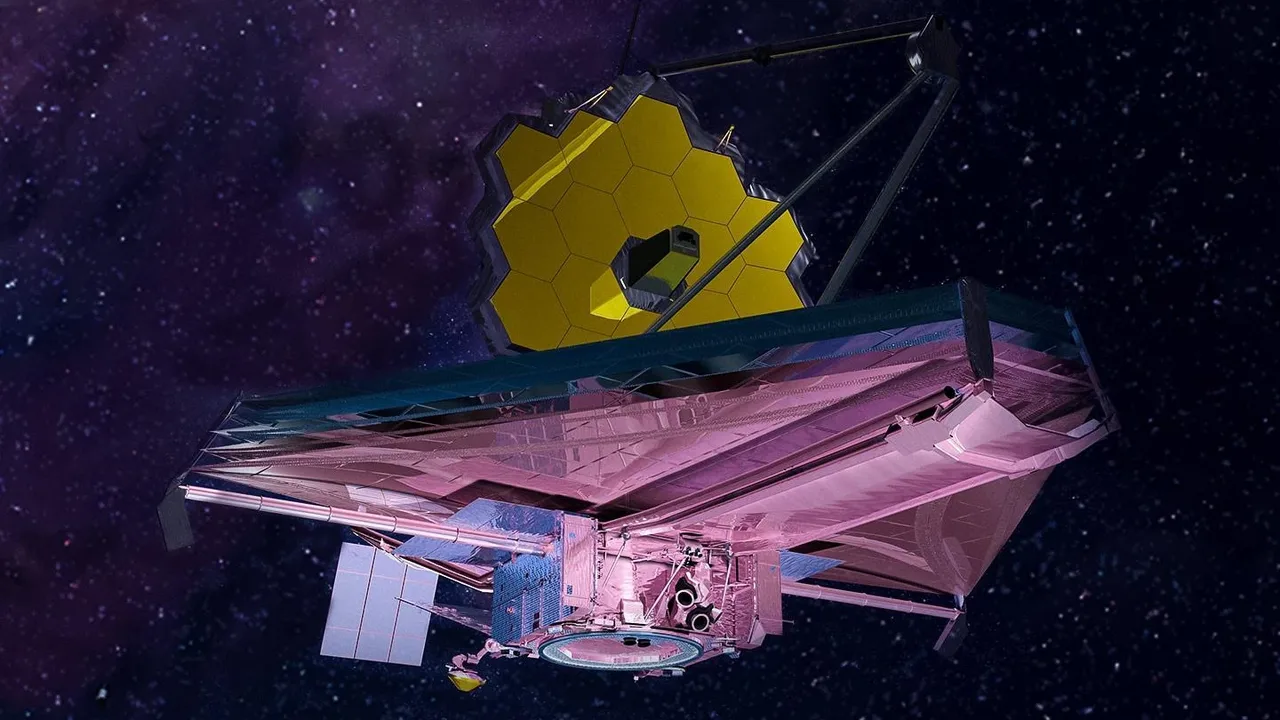
parent star and the faint glow of its planetary siblings. Astronomers often see promising bright spots in their telescope images that turn out to be nothing more than instrumental noise or a background star. These false alarms are common, but this time, the faint, persistent signal was real. Two independent teams of astronomers, one using the European Southern Observatory's Very Large Telescope (VLT) in Chile and the other using NASA's James Webb Space Telescope (JWST), spotted the elusive world just days apart. The discovery was serendipitous; both teams were actually studying another known planet in the system when they noticed something else.
The Challenge of Direct Imaging
Finding exoplanets is incredibly difficult. Most of the 6,000-plus confirmed planets have been found indirectly, by detecting the tiny dip in a star's light as a planet passes in front of it. Directly imaging a planet—actually capturing a picture of its light—is a much greater challenge. It's like trying to photograph a firefly hovering next to a powerful searchlight. Fewer than 100 exoplanets have been discovered this way. The competition for this signal was fierce. Beta Pictoris d was not only competing with the glare of its star but also with a massive, foggy debris disk that scatters light and hides objects within it. On top of that, it had to be distinguished from its much larger and brighter planetary neighbour, Beta Pictoris b. The new planet is 100 times fainter, making it the dimmest exoplanet ever directly imaged from Earth.
Meet Beta Pictoris d
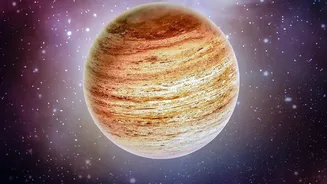
After spotting the faint signal in new observations, scientists went on a cosmic detective hunt. They combed through 11 years of archival data and found the planet lurking there all along, a ghost in the machine that had been previously overlooked. The new world is a gas giant, slightly larger than our own Jupiter, but about 2.4 times as massive. It follows a long, looping path around its star, taking approximately 91 years to complete one orbit—a journey comparable to Uranus's orbit around our sun. One team using the Webb telescope didn't just see a dot; they detected the chemical fingerprint of its atmosphere, identifying water vapour, methane, and carbon monoxide. This technique of finding planets by their atmospheric composition, rather than just their light, could revolutionize the hunt for worlds hidden in cosmic fog.
A Laboratory for Planet Formation
The Beta Pictoris system is special. At only about 20 million years old, it's a cosmic infant compared to our 4.5-billion-year-old solar system. This makes it a perfect laboratory for watching how planetary systems form and evolve. With the confirmation of Beta Pictoris d, it becomes only the second system (after HR 8799) where astronomers have directly imaged more than two planets. Systems like this are considered the 'holy grails' of discovery because they allow scientists to compare different planets that formed in the same environment. The presence of this new planet may also solve a long-standing puzzle: scientists believe Beta Pictoris d's gravity is responsible for carving the sharp inner edge of the system's massive debris disk.