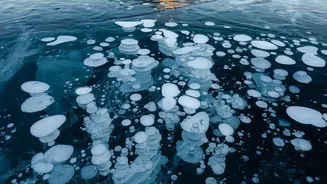

In the heart of the Canadian Rockies lies a winter spectacle that seems conjured from a fantasy world. Beneath the frozen surface of Abraham Lake, stacks of ghostly white orbs are trapped in suspended animation, creating a natural wonder.
A Visual Masterpiece
Each winter,
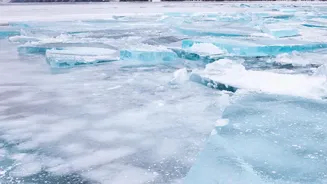
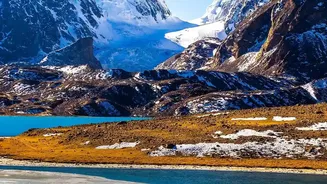
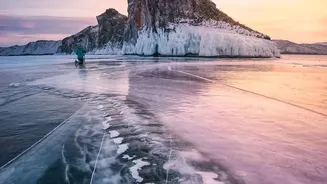
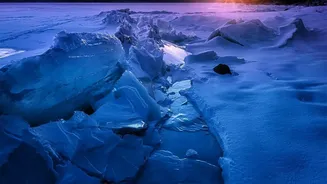
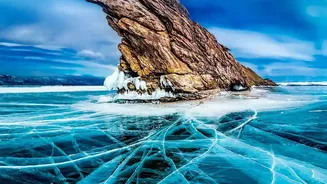
photographers and nature enthusiasts are drawn to Abraham Lake in Alberta, not for its snowy peaks, but for what lies beneath its icy shield. Thousands of frozen bubbles, looking like strings of pearls or floating jellyfish, are captured in vertical columns within the crystal-clear ice. This phenomenon creates a surreal, otherworldly landscape, where walkers can peer down through the frozen surface at stacks of these white spheres, seemingly rising from the deep. The scene is made even more dramatic by the lake's location, surrounded by the rugged beauty of the Rocky Mountains. Strong winds often sweep the ice clear of snow, creating a perfect natural window to view the spectacle below.
The Science Behind the Bubbles
The magic of Abraham Lake has a fascinating scientific explanation. The bubbles are actually frozen pockets of methane gas. This process begins at the lakebed, where bacteria decompose organic matter like dead plants and animals. As this material breaks down, it releases methane gas. In warmer months, these bubbles would simply rise to the surface and dissipate into the atmosphere. However, in winter, as the lake begins to freeze from the top down, the rising bubbles get trapped. As the ice thickens layer by layer, newly formed bubbles freeze below the previous ones, creating the striking stacked columns that make the lake famous.
A Man-Made Lake's Secret
Interestingly, Abraham Lake is not a natural glacial lake but an artificial reservoir created in 1972 by the construction of the Bighorn Dam. This man-made origin is a key reason why the bubble phenomenon is so pronounced here. When the North Saskatchewan River was dammed, it flooded a vast area of forests and grasslands. This submerged a large amount of organic material, which now provides a plentiful food source for the methane-producing bacteria on the lake floor. While many northern lakes produce methane bubbles, the sheer volume of decaying matter in Abraham Lake contributes to its unusually spectacular display. The lake itself was named after Silas Abraham, a respected guide from the Stoney Nakoda First Nation who lived in the region.
When and How to Visit
To witness this phenomenon at its peak, timing is everything. The best period to visit is typically from mid-January to early February. During this window, the ice is usually thick enough for safe walking, and the bubble formations are well-defined under clear, hard ice. Conditions can change rapidly due to snowfall, which can obscure the view. For the best photography, the golden hours of sunrise and sunset provide soft, dramatic light that accentuates the details in the ice. Popular viewing spots with good access include Preacher's Point and the area known as the Belly of Abraham.
Safety on the Ice
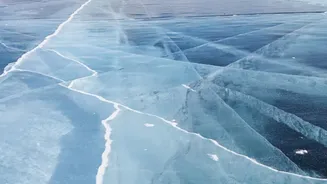
While visually stunning, a trip to Abraham Lake requires serious safety precautions. The ice is a wild, uncontrolled surface, and its thickness can vary dramatically across the lake. It's recommended that the ice be at least 15-20 cm thick for walking. Visitors should always exercise caution, stay away from areas where rivers flow into the lake, and look out for cracks or grey-coloured ice, which indicates weakness. The area is known for powerful winds and frigid temperatures, often dropping below -20°C, so dressing in warm, windproof layers is essential. For those unfamiliar with assessing ice conditions, joining a guided tour is a highly recommended and safer option.