




The Incredible Shrinking Satellite
For decades, the word ‘satellite’ conjured images of massive, costly machines, meticulously built over years and launched on towering rockets. Today, that picture is radically different. The industry is being transformed by small satellites, or ‘smallsats’—a
broad category for spacecraft weighing less than 500 kilograms. These can range from ‘minisatellites’, the size of a refrigerator, down to ‘nanosatellites’ and ‘CubeSats’, which are modular, 10-centimetre cubes. This shift from monolithic to miniature isn't just about size; it's about a complete change in philosophy. Instead of putting all their resources into one large, high-risk mission, organisations can now build and launch numerous smallsats, often for a fraction of the cost.
The Economics of Orbit
The primary driver behind the smallsat revolution is economics. Building and launching a traditional satellite can cost hundreds of millions of dollars. Smallsats slash these costs dramatically. Their smaller size and use of standardised, commercially available components significantly reduce manufacturing expenses. Launch costs are also lower, as they can be sent to orbit by smaller, more affordable rockets or even 'piggyback' as secondary payloads on larger launches. This has lowered the barrier to entry, making space accessible not just to superpowers and large corporations, but also to startups, universities, and developing nations. The shorter development cycle, sometimes just 12-24 months, allows for faster innovation and the ability to test new technologies with less financial risk.
India's Launchpad for Innovation
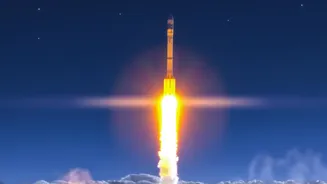
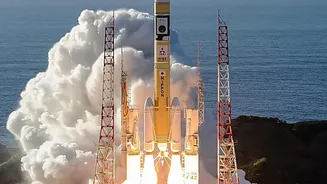
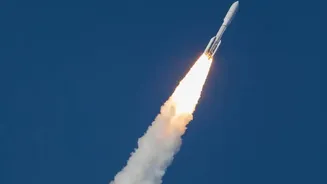
India is emerging as a major player in this new era. The Indian Space Research Organisation (ISRO) has developed the Small Satellite Launch Vehicle (SSLV), a rocket designed specifically to place payloads of up to 500 kg into low Earth orbit on demand. With a quick turnaround time and low cost, the SSLV is poised to capture a significant share of the global smallsat launch market. Following its successful validation flights, the technology is now being transferred to the private sector to enable mass production. This has catalysed a boom in India's private space industry. Startups like Skyroot Aerospace, which recently conducted the first private orbital rocket launch from India with its Vikram-1, Agnikul Cosmos with its 3D-printed engines, and Pixxel with its advanced hyperspectral imaging constellations, are now leveraging this new landscape. With nearly 400 space startups now active, India is rapidly building an ecosystem for commercial space ventures.
A Universe of Applications
What do these thousands of new satellites do? They form large groups called constellations to perform a vast array of tasks. Many are focused on Earth observation, providing high-resolution imagery for agriculture, climate monitoring, and disaster management. Others are revolutionising global communications, aiming to provide high-speed internet to remote and underserved areas. They also enable the Internet of Things (IoT), connecting devices on a global scale. For governments and defence agencies, these constellations offer enhanced capabilities for surveillance and reconnaissance. This proliferation means that instead of waiting for a single large satellite to pass overhead, users can get persistent, near-real-time data from a swarm of smaller ones.
Growing Pains in the Cosmos
This rapid growth is not without its challenges. The surge in satellite numbers, particularly in low Earth orbit, has dramatically increased the risk of collisions and the creation of space debris. A single collision can create thousands of new pieces of debris, each a threat to active satellites and future missions—a cascade effect known as the Kessler syndrome. The sheer number of satellites in large constellations also interferes with astronomical observations, leaving streaks across images from ground-based telescopes. As the space around Earth becomes more congested, there is a growing consensus on the need for better space traffic management, international regulations, and sustainable practices to ensure the long-term viability of space activities.