





What Exactly Is El Niño?
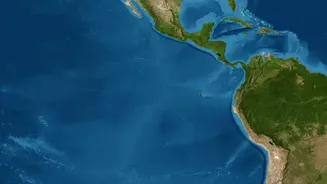
El Niño, which means "the little boy" in Spanish, is the warm phase of a natural climate pattern called the El Niño-Southern Oscillation (ENSO). It occurs irregularly every two to seven years when the sea surface temperatures in the central and eastern
tropical Pacific Ocean become significantly warmer than average. This warming isn't just a local event; it triggers a cascade of atmospheric changes that ripple across the globe, altering wind and rainfall patterns far and wide. The opposite phase, known as La Niña, involves a cooling of the same ocean region and has its own set of global weather impacts.
The Link to India's Monsoon
The primary way El Niño affects India is by disrupting the southwest monsoon, the lifeblood of the country's agriculture. Normally, strong trade winds blow from east to west across the Pacific, piling up warm water in Asia. This helps create a low-pressure system that powers the Indian monsoon. During an El Niño, these trade winds weaken or even reverse. The pool of warm water shifts eastward, away from Asia and toward the Americas. This shift alters the large-scale atmospheric circulation, weakening the system that drives moisture-laden winds from the Indian Ocean towards the subcontinent. The result is often a suppressed or weaker monsoon, leading to deficient rainfall across large parts of India.
A Threat to Agriculture
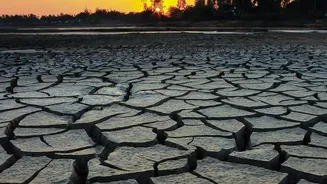
With a weaker monsoon comes a direct threat to Indian agriculture, which is heavily dependent on rainfall. The Kharif or summer crops, such as rice, oilseeds, pulses, and cotton, are particularly vulnerable as their sowing and growth cycles coincide with the monsoon months. Insufficient rain can lead to delayed sowing, reduced crop area, and lower yields, directly impacting farmers' incomes. An analysis of past strong El Niño events has shown significant average production drops in crops like jowar, tur, bajra, and cotton. The impact can extend to the Rabi or winter crop season as well, since poor monsoon rains lead to lower water levels in reservoirs, affecting irrigation capacity for the subsequent season.
Not a Perfect Prediction
While the correlation between El Niño and a poor monsoon is strong, it is not a guarantee. There have been El Niño years where India received normal rainfall. This is because other climate phenomena can influence the monsoon's performance. The most significant of these is the Indian Ocean Dipole (IOD), sometimes called the Indian Niño. The IOD refers to the temperature difference between the western and eastern parts of the Indian Ocean. A 'positive' IOD, with warmer waters in the western Indian Ocean, can help bring good rains to India and sometimes even counteract the negative effects of an El Niño. Therefore, meteorologists closely watch the interplay between El Niño and the IOD to make more accurate monsoon forecasts.
The Broader Economic Impact
The consequences of a weak, El Niño-driven monsoon ripple through the entire Indian economy. A fall in agricultural output not only threatens the livelihoods of millions but also pushes up food prices, stoking inflation that affects every household. Reduced rural income can dampen demand for goods and services, impacting various industries from tractors to consumer goods. Because agriculture is such a significant part of India's economy, a severe drought can even lead to a noticeable drop in the country's overall GDP growth. Recent forecasts for 2026 suggest a developing El Niño could become one of the strongest on record, prompting close monitoring from government agencies and farmers alike.