






Everyday Condensation: Usually Not a Crisis
The most common and least threatening form of damp is condensation. This happens when warm, moist air inside your home hits a colder surface, like a window or an exterior wall in winter. It’s the same reason a cold glass of water “sweats” in the summer.
You’ll often see it on bathroom walls after a hot shower or on windows on a cold morning. In most cases, this type of moisture is temporary. If it disappears after you improve ventilation by opening a window or using an extractor fan, it's likely just a surface-level issue. Wiping it away and managing indoor humidity is often all that's needed.
Red Flag 1: A Musty Smell That Won’t Go Away
Your nose is one of your best tools for detecting a serious moisture problem. A persistent, earthy or musty odour that lingers even after you've aired out a room is a major red flag. This smell is often caused by mould or mildew growing in hidden places, such as inside walls, under flooring, or in your attic. Unlike temporary dampness, which might smell fresh like rain, this deeper scent suggests moisture has been present long enough for fungal growth to begin, pointing to a more chronic issue.
Red Flag 2: Stains, Bubbles, and Peeling Paint
Look closely at your walls and ceilings. While a small surface watermark might dry and fade, persistent moisture leaves behind more obvious clues. Yellow or brown stains on ceilings are classic signs of a leak from above. Paint that is bubbling, peeling, or blistering indicates that water is getting into the plaster behind the paint. Similarly, wallpaper that peels away easily is a sign that moisture has compromised the wall beneath. These symptoms show that water isn't just on the surface; it's within the structure of your home.
Red Flag 3: White, Chalky Deposits on Masonry
If you notice a white, fuzzy, or crystalline substance on your brick, concrete, or plaster walls, you're likely seeing efflorescence. This happens when water seeps through masonry, dissolves the natural salts within it, and then evaporates, leaving the salt deposits behind. While the efflorescence itself is harmless, its presence is a clear sign that water is travelling through your walls. If it reappears after being cleaned off, it confirms an active moisture problem, such as penetrating damp from outside or a plumbing leak.
Red Flag 4: Rising Damp and Tide Marks
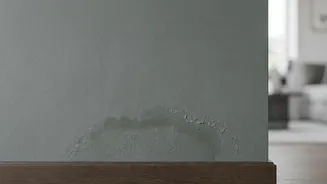
One of the more serious types of damp is rising damp, which occurs when groundwater travels up through the walls of a building. This usually happens when a property’s damp-proof course is missing, old, or damaged. The most tell-tale sign is a “tide mark” — a horizontal stain that appears on the lower part of a wall, typically no more than a metre above the skirting board. The wall below this line may feel damp or cold, and you might see rotting skirting boards or crumbling plaster. This is not a DIY fix and requires professional assessment.
When to Call a Professional
While you can manage minor condensation yourself, certain signs warrant an immediate call to a specialist. If you see large damp patches (over a metre wide), notice that mould returns quickly after cleaning, or find issues like warped wood or crumbling plaster, it’s time for an expert opinion. A professional can accurately diagnose the type of damp — whether it's condensation, a leak (penetrating damp), or rising damp — and recommend the correct course of action to prevent long-term structural damage and protect your family's health.