

A Treasure Map for Lunar Water
Recent advancements have produced highly detailed maps pointing to significant hydrogen concentrations near the lunar south pole. This hydrogen is the tell-tale sign of water ice. While orbiters have hinted at this for years, these new maps, created using
data from instruments called neutron spectrometers, provide a much clearer picture. They don’t just say water is there; they indicate where it might be found within the top meter of the lunar soil, or regolith. This is a critical distinction, as 'accessible' ice is far more valuable than ice buried deep beneath the surface, which would require heavy, complex drilling equipment that is difficult to transport and operate in the harsh lunar environment.
How Neutron Spectrometers Find Water
Finding water from orbit without landing sounds complex, but the physics is clever and elegant. The Moon is constantly bombarded by high-energy cosmic rays from deep space. These rays strike the lunar soil and send neutrons scattering. A neutron spectrometer is an instrument that counts these escaping neutrons and measures their energy. When neutrons collide with hydrogen atoms—the 'H' in H₂O—they lose a significant amount of energy, much like a billiard ball stopping dead after hitting another ball of the same size. Therefore, if the spectrometer detects fewer medium-energy neutrons escaping from a particular area, it's a strong indicator that hydrogen is present just below the surface, trapping them. These areas of neutron suppression become the bright spots on the new lunar water maps.
The South Pole: Prime Real Estate
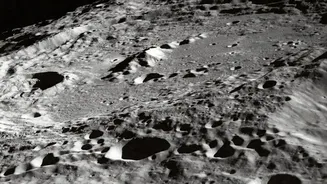
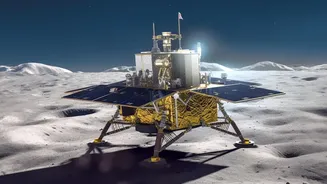
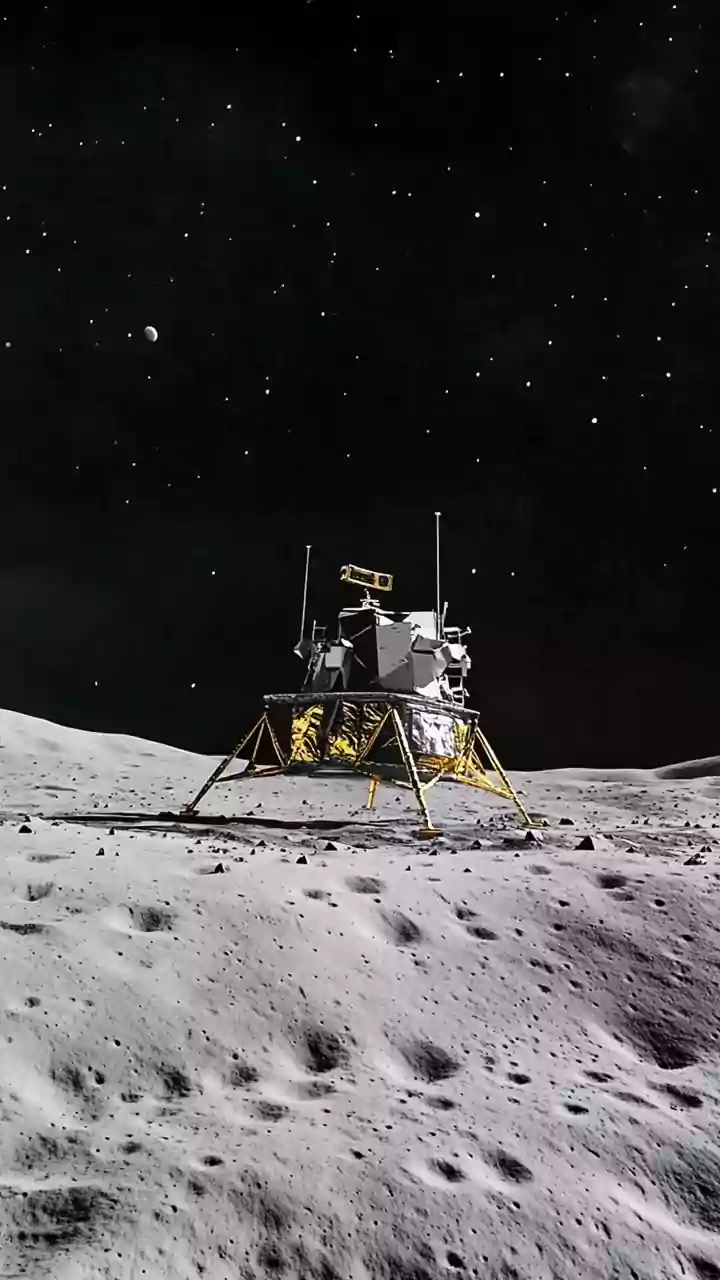
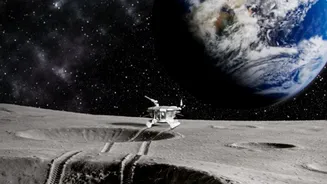
Space agencies globally, including India's ISRO, have their sights set on the Moon’s south pole for a reason. Unlike much of the Moon, which endures harsh cycles of sunlight and darkness, the south pole has craters with 'permanently shadowed regions' (PSRs). These areas have not seen direct sunlight for potentially billions of years, creating incredibly cold conditions that allow water ice to remain stable and preserved. India’s historic Chandrayaan-3 landing in this region in 2023 underscored its strategic importance. These dark, frigid craters are the treasure chests that these new spectrometer maps are helping to unlock.
More Than Just a Drink
The excitement over lunar water isn't just about providing drinking water for future astronauts. Water's true value lies in its components: hydrogen and oxygen. Using electrolysis, water ice can be split into breathable air for habitats and, most importantly, the two key ingredients for powerful rocket propellant. This concept, known as in-situ resource utilization (ISRU), is a complete game-changer. Being able to manufacture rocket fuel on the Moon could transform it from a destination into a deep-space refueling station. Missions to Mars and beyond would no longer need to carry all their fuel from Earth, dramatically cutting costs and increasing payload capacity.
India's Stake in the Lunar Race
India has been a pioneer in the modern search for lunar water. ISRO's Chandrayaan-1 mission in 2008, carrying a NASA instrument, provided definitive confirmation of water on the Moon. The subsequent successful landing of Chandrayaan-3 near the south pole cemented India's position as a major player in lunar exploration. Future missions, like the joint ISRO-JAXA LUPEX (Lunar Polar Exploration) mission, will deploy rovers equipped with instruments like NASA's Neutron Spectrometer System (NSS) to get 'ground truth' and analyze these hydrogen-rich areas up close. The data from these global mapping efforts directly informs the strategy for India’s ambitious future lunar plans, helping to identify the most promising sites for scientific research and potential resource extraction.