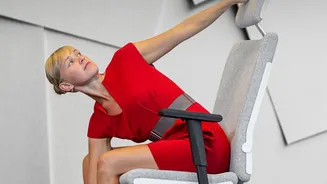




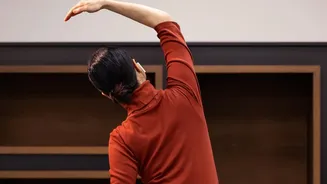
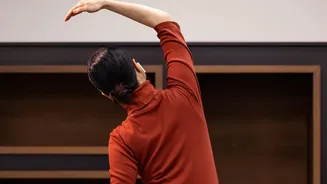

The Problem with Prolonged Sitting
Modern work often requires long hours spent in a chair, staring at a screen. While it may seem harmless, this sedentary behaviour takes a toll. Prolonged sitting is linked to a host of physical issues, including musculoskeletal problems, poor circulation,
and increased stress. Over time, the muscles in your back and core can weaken, leading to poor posture and chronic pain. Even your mental focus suffers; studies have shown that continuous, uninterrupted work leads to mental fatigue and a decline in concentration and creativity.
The Power of a 60-Second Reset
The solution isn't necessarily a longer lunch break or an intense gym session. Research shows that 'micro-breaks'—short, simple movements lasting just a minute or two—can have a significant impact. Taking brief breaks to stand, stretch, or walk around helps counteract the negative effects of being stationary. These small interruptions increase blood flow, re-engage dormant muscles, and give your brain a much-needed reset. This can lead to improved focus, reduced stress, and a better mood, making you more productive and resilient throughout the workday.
Spotlight on the Standing Torso Twist
Among the many possible micro-break exercises, the standing torso twist is a standout for office workers. It requires no equipment and minimal space, making it perfect for a quick reset by your desk. This movement specifically targets the thoracic spine (your mid-back), which often becomes stiff from slouching. By rotating your torso, you engage your oblique muscles, strengthen your core, and improve spinal flexibility. This helps to relieve tension in the back and shoulders, improve posture, and can even reduce the risk of back pain.
How to Do It Right: A Step-by-Step Guide
Proper form is key to getting the benefits and avoiding strain. Follow these simple steps for a safe and effective standing torso twist: 1. Stand with your feet shoulder-width apart and a slight bend in your knees. A stable base is crucial. 2. Engage your core muscles by gently tightening your abdomen, as if preparing for a light punch. This protects your lower back. 3. Place your arms where they are comfortable—either bent at a 90-degree angle at your sides, crossed over your chest, or with hands on your hips. 4. Slowly and deliberately rotate your torso to one side. Allow your head to follow the movement, and let the opposite heel lift slightly off the floor as you pivot. 5. Move from your core, not by swinging your arms or using momentum. The twist should be controlled. 6. Hold the twist for a moment, then smoothly return to the center and repeat on the other side. Aim for 30-60 seconds of continuous, gentle twisting.
Common Mistakes and Who Should Be Cautious
To prevent injury, avoid twisting too quickly or using forceful, jerky movements. A common mistake is to generate the twist from the arms instead of the core muscles. Focus on rotating from your mid-section. Also, remember to breathe throughout the exercise; don't hold your breath. While this is a gentle exercise for most, it's not for everyone. Individuals with a history of spinal injuries, such as a herniated disc, should consult a healthcare provider before performing twists. Similarly, if you've had recent abdominal or back surgery, it is best to avoid this movement until you are cleared by a doctor.
Building the Habit Into Your Day
The hardest part of any new routine is remembering to do it. To make movement breaks a consistent habit, try linking them to an existing part of your workday. For example, do a set of torso twists every time you finish a big task, after a long meeting, or before you get up to refill your water bottle. You could also set a simple timer on your phone or computer to remind you to stand up and move for one or two minutes every hour. Start small. The goal isn't a full workout, but rather to break the cycle of prolonged stillness. A few gentle twists a couple of times a day can make a world of difference.