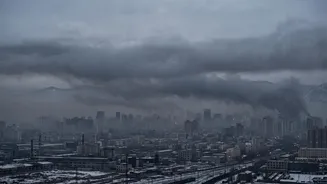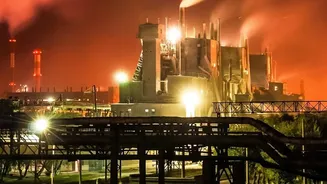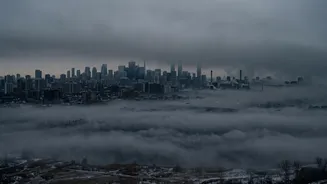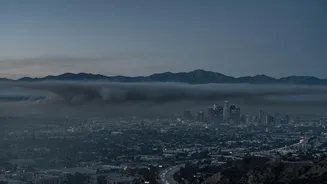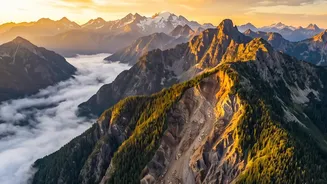





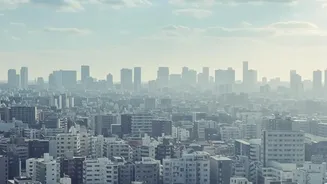
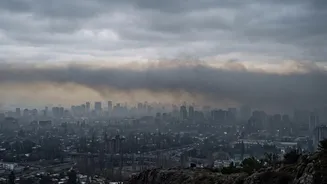

Every winter, a familiar grey haze descends upon many Indian cities, making the air thick and heavy. This isn't just fog; it's a smoggy cocktail of pollutants. The reason it lingers is a fascinating atmospheric phenomenon known as an inversion.
How The Atmosphere Usually Works
On a typical
day, the air closest to the ground is warm. The sun heats the earth’s surface, which in turn warms the layer of air directly above it. Because warm air is less dense than cool air, it rises. As this parcel of air ascends, it carries pollutants—like smoke from vehicles, dust from construction, and industrial emissions—upward and away from the ground. Higher in the atmosphere, winds disperse these pollutants, effectively cleaning the air we breathe. This constant vertical mixing is the atmosphere's natural cleaning service.
The Winter Flip: Temperature Inversion
During winter, especially on calm, clear nights, this normal process gets turned upside down. The ground rapidly loses heat after sunset, becoming cold very quickly. This, in turn, chills the layer of air nearest to it. Meanwhile, the air higher up remains relatively warm. This creates a scenario where a layer of cold, dense air is pinned to the surface, trapped beneath a layer of warmer, lighter air. This reversal of the normal temperature gradient—cool air below, warm air above—is called a temperature inversion.
An Invisible Lid on Our Cities
This layer of warm air acts like an atmospheric 'lid' or 'cap'. The cold, heavy air at the ground level is blocked from rising. Because the air isn't mixing vertically, all the pollutants being emitted at the surface get trapped in this shallow, cold layer. Smoke from stubble burning, vehicle exhaust, and industrial processes are continuously pumped into this confined space with nowhere to go. The result is a rapid accumulation of harmful particulate matter, like PM2.5 and PM10, leading to the dense, toxic smog that characterises winter in much of North India.
Why North India Is Particularly Vulnerable
Several factors make this phenomenon particularly severe across the Indo-Gangetic Plain. The region's geography, walled in by the Himalayas, physically blocks winds and prevents pollutants from dispersing northward. Winter in this part of the country is also marked by low wind speeds and calm conditions, which prevent pollutants from being cleared away horizontally. This combination of a geographical bowl and stagnant weather creates the perfect conditions for strong, persistent inversion layers to form and trap pollutants for days on end.
Breaking the Inversion Cycle
An inversion layer isn't permanent. It typically breaks when the sun's energy is strong enough to heat the ground again. As the ground warms, the layer of air next to it also warms up, eventually becoming warmer than the air above it and restoring the normal atmospheric pattern. This allows the trapped pollutants to rise and disperse. Strong winds can also help by physically mixing the layers of air and breaking the stagnant cap. However, during peak winter, the low angle of the sun means the ground heats up slowly, often allowing the inversion—and the pollution—to persist for most of the day.