



Understanding Moss Basics
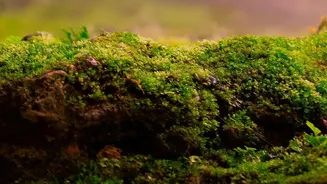
Before you choose your greenery, it helps to know the two main categories of moss. Acrocarpous mosses, like Cushion Moss, have an upright, clumping growth habit. They tend to grow more slowly and form dense, mounded colonies. Pleurocarpous mosses, such
as Sheet Moss or Fern Moss, have a branching, creeping habit that forms a flat carpet. They generally grow faster and are excellent for covering surfaces. The most critical difference for a decorator is their water preference: acrocarps typically need to dry out between waterings to prevent rot, while pleurocarps prefer more consistent moisture. Planting them together can be difficult, as a watering schedule that suits one may harm the other.
Matching Moss to Your Light
Most moss species thrive in shade or indirect light, which makes them perfect for many indoor settings. Strong, direct sunlight, especially through a window, can quickly scorch and dry them out. For rooms with limited natural light, consider species like Mood Moss (Dicranum scoparium) or Cushion Moss (Leucobryum glaucum), both of which are happy in low to medium indirect light. Sheet Moss (Hypnum species) is also highly versatile and can adapt to various shade levels. If you have a spot that gets bright, indirect light, Reindeer Moss (which is actually a lichen) can be a beautiful choice. For spaces with no natural light at all, such as an interior bathroom, preserved moss is the ideal solution. It requires no light or water and offers the same aesthetic without any maintenance.
Getting Moisture Levels Right
Moisture is the most critical factor for a healthy moss garden. Moss absorbs water through its leaves, not a complex root system, so consistent humidity is key. However, 'moist' does not mean 'soggy'. Standing water can cause moss to turn black and rot. Different species have different needs. For example, Fern Moss (Thuidium delicatulum) loves high humidity and is perfect for closed terrariums, but it will not tolerate drying out. Conversely, Mood Moss must be allowed to dry between waterings to stay healthy. As a general rule, misting your living moss with filtered or distilled water two or three times a week is a good starting point. Tap water can contain minerals and chlorine that may cause browning over time.
Popular Moss Choices for Beginners
If you're just starting, it's best to choose forgiving and widely available species. Sheet Moss (Hypnum imponens) is a top contender for its carpet-like growth and adaptability, making it great for covering the 'floor' of a terrarium. Cushion Moss (Leucobryum glaucum) provides wonderful, soft mounds and texture, thriving in the high humidity of a closed container. Mood Moss (Dicranum scoparium) is another versatile choice, with lush, wavy leaves that create a windswept look and can adapt to a wider range of conditions than many other types. For something a little different, Java Moss (Taxiphyllum barbieri) is incredibly resilient and can grow on almost any surface, from soil to rocks and wood.
Creating and Maintaining Your Garden
To build your garden, start with a container—a glass terrarium is perfect for maintaining humidity. Create a base layer of small pebbles for drainage, followed by a thin layer of activated charcoal to keep the environment fresh. Top this with a moist substrate like a peat or coco coir mix. Arrange your chosen moss on top, pressing it gently to ensure good contact with the substrate. For long-term care, keep the garden in a spot with indirect light and mist regularly. If you see condensation on the glass of a closed terrarium, humidity is sufficient. If water pools at the bottom, open the lid for a few hours to allow for ventilation and prevent mould. Trim any overgrown sections with small scissors to maintain the desired shape.