







The Deluge and the Digital Lifeline
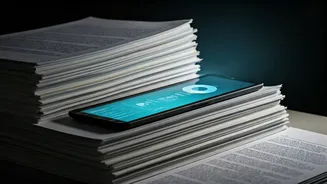
For students, academics, and professionals in fields like medicine and engineering, the phrase ‘literature review’ often invokes a sense of dread. It means spending countless hours, even weeks, sifting through dozens, if not hundreds, of lengthy, jargon-filled
research papers. The challenge isn't just finding the papers; it's digesting them. A single paper can be 20-30 pages long, packed with complex methodologies, data tables, and nuanced arguments. Staying current in any specialized field has become a near-impossible task for a human alone. This information overload is the problem that a new generation of AI-powered reading software aims to solve. Tools like Elicit, SciSpace, and Semantic Scholar are emerging not as simple search engines, but as interactive 'copilots' for navigating the dense forest of academic literature.
How AI Reads for You
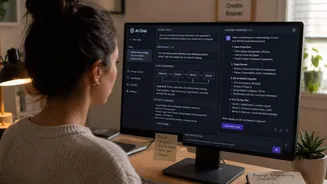
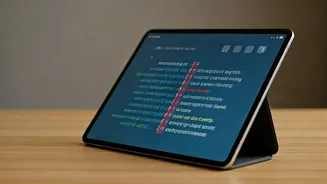
So, how does it work? Instead of you reading a paper from top to bottom, these platforms read it for you. The user experience is surprisingly simple and intuitive. Typically, you can upload a PDF of a research paper or simply ask the AI a question about a specific topic. The software then scans its own vast database or the provided document in seconds. What you get back isn't just a list of keywords. The AI can provide a concise, plain-language summary of the paper’s abstract, methodology, and conclusions. You can highlight a confusing paragraph, a complex table, or a mathematical formula and ask the AI to 'explain this like I’m a beginner.' It can extract key figures, identify the main arguments, and even compare the findings of one paper against another. It transforms the static, one-way experience of reading into a dynamic, two-way conversation with the knowledge itself.
The Promise of Superhuman Speed
The most immediate and transformative benefit is speed. A researcher who once needed a full day to thoroughly read and understand three or four papers can now get a functional overview of twenty in the same amount of time. This accelerates the research lifecycle dramatically. A PhD student can identify the most relevant literature for their thesis in a week instead of a month. A doctor can quickly get the gist of the latest clinical trial results between appointments. This isn't just about saving time; it's about expanding scope. By handling the initial, heavy-lifting phase of comprehension, the AI frees up human intellect for higher-order tasks: questioning assumptions, spotting gaps in the research, and generating novel hypotheses. It allows experts to spend less time on laborious reading and more time on critical thinking and innovation.
Democratising Dense Knowledge
Beyond the lab and the library, these tools hold the potential to democratise access to specialised information. For decades, scientific and academic papers have been largely inaccessible to non-experts. Their dense language and assumed background knowledge form a barrier for policymakers, journalists, and the curious public. An AI assistant that can translate this complexity into understandable prose is a powerful levelling tool. A journalist on a deadline covering a new medical breakthrough can get a reliable summary without misinterpreting the science. A small startup can research cutting-edge material science without hiring a dedicated R&D team. This helps bridge the gap between the creation of knowledge and its practical application in the wider world, ensuring that important findings don't remain locked away in academic silos.
The Critical Caveats and Risks
However, this powerful new capability comes with significant risks. The Large Language Models (LLMs) that power these tools are notorious for 'hallucinations'—inventing facts, citations, or details with complete confidence. An AI might misinterpret the nuance of a conclusion, strip out crucial context, or summarise a finding in a way that makes it sound more definitive than it is. Over-reliance on these tools could lead to a generation of researchers who know how to find answers but have lost the skill of deep, critical reading. The software is an assistant, not a replacement for expertise. The final judgment on a paper's validity, its methodological rigour, and the subtlety of its claims must still rest with the human user. Trusting the AI's summary without ever reading the source material is a shortcut that can lead to flawed science and dangerous misunderstandings.