






The Science of Sole on Soil
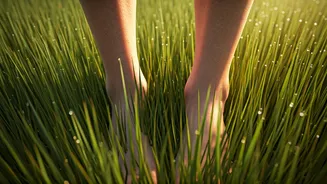
Walking barefoot allows your feet to move without restriction, engaging muscles that are often neglected inside supportive shoes. This practice, known as "grounding" or "earthing," is rooted in the idea of reconnecting with the Earth's surface. From a purely
physical standpoint, walking on an uneven surface like grass challenges the small muscles in your feet and ankles, which can improve strength, balance, and proprioception—your body's awareness of its position in space. [2, 12, 14] Enhanced proprioception means your brain gets better feedback from the 200,000-plus nerve endings in your soles, leading to improved coordination and stability. [6] Over time, this can contribute to better overall posture and alignment, potentially reducing strain on your knees, hips, and lower back. [2, 12]
What is 'Grounding'?
Beyond the mechanical benefits, grounding has a more theoretical side. The central idea is that the Earth has a subtle, negative electrical charge, and direct contact allows our bodies to absorb free electrons. [11, 16] Proponents suggest these electrons act like antioxidants, helping to neutralize free radicals and reduce inflammation—a key driver of post-exercise muscle soreness. [16, 18, 19] Some small studies have explored grounding for its effects on muscle damage, pain, and inflammation. One study noted that grounding appeared to reduce post-exercise muscle damage and pain. [10] Another found that athletes sleeping on grounding mats experienced less muscle soreness and faster recovery markers compared to a control group. [16] While this area of research is still emerging and requires more robust investigation, the initial findings are intriguing. [10]
A Boost for Your Brain
The benefits aren't just for your muscles. The act of exercising in a natural environment, often called "green exercise," has been shown to have significant mental health advantages. [3, 4] Studies indicate that physical activity outdoors can improve mood, reduce stress, and enhance overall well-being more effectively than indoor exercise. [3, 8] Simply being in a green space can lower levels of the stress hormone cortisol. [5] The sensory experience—feeling the texture of the grass, the temperature of the earth, and connecting with nature—can be a powerful form of mindfulness, drawing your attention away from internal worries and promoting a sense of calm. [15, 23]
How to Do It Right
Integrating this practice into your routine is simple. After a workout, find a clean, safe patch of grass. Start with just five to ten minutes of slow, mindful walking. Pay attention to how your feet feel as they connect with the ground. Focus on a natural walking pattern, allowing your foot to land softly. [21] You don’t need to do it for long; some studies on green exercise suggest benefits can be felt in as little as five minutes. [9] The goal is to make it a relaxing cool-down ritual, not another strenuous task. As your feet adapt, you can gradually increase the duration. [14]
Know the Risks
While walking barefoot feels natural, our feet are often unaccustomed to it. The most obvious risks come from the environment itself. Always scan the area for sharp objects like glass, rocks, or thorns before you begin. [7, 21] Be mindful of pesticides or chemicals that may have been used on the lawn. [21] Walking barefoot in public areas can also expose your feet to bacterial or fungal infections like athlete's foot, especially if you have any cuts or scrapes. [20] If you have a pre-existing foot condition, diabetes, or circulation issues, it's crucial to consult with a doctor before trying barefoot walking, as even small injuries can lead to complications. [7, 13]