
The Irresistible Allure of the Curve
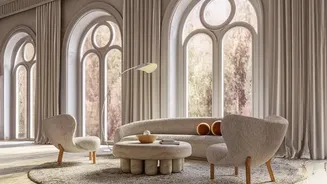
There's no denying the appeal of the curved furniture trend, a movement that has firmly shifted from niche to mainstream. These pieces, with their soft, organic forms, tap into a fundamental human preference for shapes that mimic the natural world—think
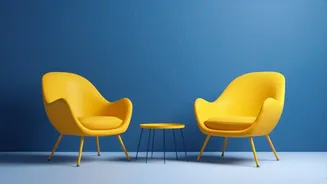
rolling hills and smooth stones. Psychologically, curves are associated with comfort, relaxation, and warmth, making them a welcome antidote to the rigid, sharp angles that can make a space feel cold or imposing. A curved sofa can instantly make a living room feel more inviting and social, its shape naturally encouraging conversation by angling people toward one another. Similarly, a round dining table fosters a sense of intimacy and connection. This trend, also known as biophilic design, is about more than just aesthetics; it's a response to our need for nurturing, serene environments, especially as we spend more time at home.
The Quiet Strength of the Straight Line
But before we fill our homes with nothing but circles and arcs, it’s crucial to appreciate the power of the straight line. The walls, floors, and ceilings of most rooms provide a foundational grid. Straight lines bring a sense of order, stability, and structure to an interior. They ground a space, create a feeling of calm, and can make rooms feel taller or wider. A room dominated by too many curves can feel whimsical and lack definition, while a room with only straight lines can feel sterile and rigid. The magic, as any designer will tell you, lies in the interplay between the two. The tension and contrast created by mixing curves and straight lines is what gives a space depth, sophistication, and visual interest.
Why Boxy Rooms Are a Curve's Best Friend
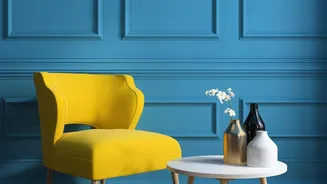
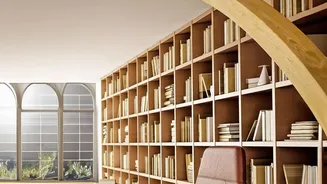
This brings us to the core of the matter: a simple, balanced room—typically a square or rectangle—is the ideal canvas for showcasing curved furniture. It might seem counterintuitive, but the very boxiness of a standard room provides the perfect structural counterpoint that makes a curved sofa or chair truly stand out. The juxtaposition is what creates the drama. An arched mirror is striking because it hangs on a flat wall; a sinuous chaise lounge captures the eye because it sits within an angular room. Fighting the architecture of your home is a losing battle. Instead, embrace the straight lines of your space as the framework that allows your curved pieces to become the sculptural focal points they are meant to be.
Achieving Harmony in Your Home
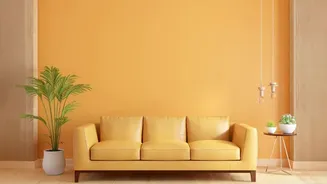
So, how do you practically apply this principle? First, resist the urge to push a curved sofa against a straight wall. Floating the sofa, even just a few inches, allows its signature shape to be fully appreciated and helps create better traffic flow. This placement turns the sofa into a deliberate statement piece. For smaller rectangular rooms, a compact curved sofa can create the feeling of a 'room within a room', defining a cosy conversation area. Balance your main curved piece with rectilinear elements. Pair a rounded sofa with a rectangular rug, geometric-patterned cushions, or crisp, framed art. This anchors the space and keeps it from feeling unstructured. You can also introduce smaller curves through accessories like lamps, mirrors, or side tables to echo your main piece without overwhelming the room.