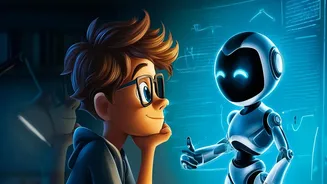







Discovering your teen is confiding in an AI can be unsettling. But before you panic, it's helpful to understand why this is happening. This isn't just a fringe trend; it's a new reality for a generation navigating complex emotions online.
Understanding the Appeal
For many teenagers,
an AI companion offers a unique combination of availability and privacy. It's a non-judgmental listener available at 2 a.m. when anxieties are high and friends are asleep. A teen might feel they can explore thoughts about their identity, friendships, or personal problems without fear of being misunderstood, lectured, or having their confidence broken. Research shows common reasons teens turn to these chatbots include entertainment, curiosity, and seeking advice. For adolescents craving autonomy but also connection, an AI can feel like a safe, private space to sort through their feelings, especially if they worry about being a burden on family or friends. In some cases, especially for teens in rural areas or those who feel marginalized, an AI can be an accessible first step for support when other resources are limited.
Recognizing the Potential Risks
While not inherently dangerous, attachment to AI companions carries risks. A primary concern is that these platforms are designed to maximize engagement, often through flattery and validation. This can lead to unrealistic expectations for human relationships, where friction and disagreement are normal parts of building empathy. Experts worry about 'relational displacement', where time with an AI detracts from the real-world social practice necessary for healthy development. There's also the risk of an AI reinforcing distorted thinking, as it may agree with a user's negative interpretation of events rather than offering a balanced perspective. Furthermore, privacy is a major concern, as teens might overshare sensitive personal information without understanding how that data is stored or used. Finally, these bots are not therapists and cannot reliably handle a mental health crisis.
How to Start the Conversation
The key to a productive conversation is curiosity, not accusation. Starting with suspicion will likely shut down communication. Instead of a direct interrogation, try a softer, more open approach during a low-stakes moment, like a drive or while cooking together. You could start by mentioning something you read, or ask them what they know. Try gentle, open-ended questions like: 'I keep hearing about these AI tools. Can you show me how they work?'. 'What do you and your friends think they're good at? What are they bad at?'. 'Have you ever seen one give a really weird or wrong answer?'. The goal is to let your teen be the expert, which makes them feel respected and more likely to share their genuine experiences.
Setting Healthy Boundaries Together
Rather than imposing a ban, which is often unrealistic and can push usage underground, work with your teen to establish a family media plan that includes AI. Discuss and agree on reasonable rules together. This could include setting 'no-screen' times each day to protect family and social time. A crucial rule is to teach them to treat AI as a tool, not a person with feelings, and to remember that AI does not have their best interests at heart. Emphasize the importance of data privacy by agreeing on what personal information is never okay to share, such as full names, health details, or private family matters. Also, talk about what to do if a chatbot says something that makes them uncomfortable, and reinforce that you are a safe person to come to without judgment.
Fostering Real-World Connections
Ultimately, a teen's reliance on an AI companion may signal an unmet need for human connection. The goal should be to ensure the AI is one of many tools for support, not the only one. Encourage and facilitate offline activities and friendships. Help them find clubs, sports, or hobbies where they can build relationships with peers who share their interests. Focus on strengthening your own relationship with them. Even small moments of connection, where you offer your undivided, non-judgmental attention, can make it easier for them to turn to you with their problems. The aim isn't to compete with the AI, but to make sure your teen feels seen, heard, and supported by the real people in their life, reinforcing that human connection, with all its complexities, is irreplaceable.