







The Same Book, Different Chapters
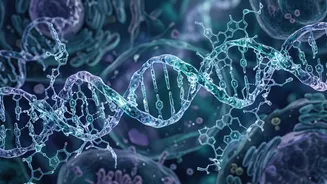
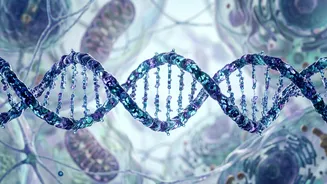
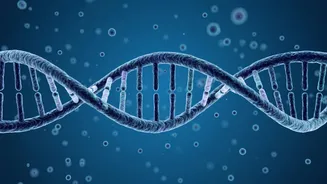
Think of your DNA as a massive instruction manual. A heart cell and a brain cell both have the full manual, but they only read the chapters relevant to their job. A heart cell reads the 'how to beat' chapter, while a brain cell reads the 'how to send
signals' chapter. This process is called gene expression. The critical point is this: when a typo—or a genetic mutation—occurs in the manual, its effect depends entirely on which cell is reading it. A typo in a chapter that a heart cell never reads might have no effect on the heart. But in a cell that relies on that specific instruction, the same typo could be catastrophic. This concept, known as cellular context, is fundamental to modern biology. It explains why a single genetic variant can lead to disease in one part of the body but remain harmless elsewhere.
Enter AI For Biology
This is where Google's AI lab, DeepMind, comes in. You may have heard of their revolutionary model, AlphaFold, which solved the 50-year-old 'protein folding problem' by predicting the 3D shape of proteins from their amino acid sequence. This was a monumental leap, as a protein's shape determines its function. Building on this, the 'AlphaGenome' family of models aims to read the DNA sequence itself and predict how genes are regulated and expressed. The first version could predict gene activity across broad tissues, but it often missed the subtle, cell-specific details. It was like getting a weather forecast for an entire state when what you really need to know is if it will rain on your specific street.
AlphaGenome 2: The Context Engine
The newly announced AlphaGenome 2 is designed to solve this exact problem. Instead of providing a single, tissue-wide average, AlphaGenome 2 is a 'conditional model'. This means researchers can give it two inputs: the DNA sequence and the specific cell type they are interested in. The model then predicts how that DNA variant will affect gene activity within that specific cellular context. This is a huge leap forward. According to DeepMind, this new approach identifies nearly twice as many variants that alter gene expression compared to previous models. It can distinguish between a resting immune cell and one that's been activated by a vaccine, predicting how a variant associated with severe COVID-19 might have a stronger effect only in that activated state.
Why This Changes The Game
For years, scientists have used genome-wide association studies (GWAS) to find links between genetic variants and diseases like cancer or diabetes. The problem is, these studies often point to a large region of DNA, not the specific culprit or the cell type where the problem occurs. AlphaGenome 2 acts like a high-powered searchlight, helping researchers pinpoint the likely causal variant and, crucially, the exact cell type where its effects are most pronounced. For example, in research on inflammatory bowel disease, the model was able to computationally reproduce an experimental finding, flagging the specific variant and showing its effect was localized to immune cells in the gut. This ability to narrow the search saves immense time and resources in the lab.
From Code to Cure
The ultimate goal of this technology is to accelerate the path from a genetic discovery to a viable treatment. By understanding which gene is affected by a variant and in which cells, drug developers can design more targeted and effective therapies. If a disease is caused by a gene being overactive in liver cells, for instance, a drug can be designed to specifically address that issue in that location, potentially avoiding side effects elsewhere. While AlphaGenome 2 is currently restricted to research use and not approved for diagnostics, it represents a pivotal shift. It moves AI in genomics from simply reading the DNA code to understanding its meaning in the complex, dynamic ecosystem of the human body. This deeper understanding is the bedrock upon which the next generation of precision medicine will be built.