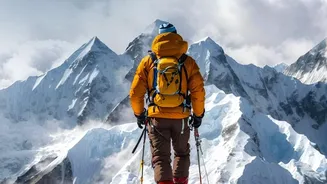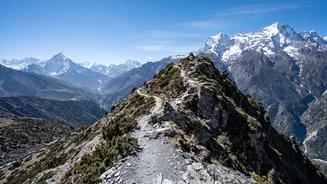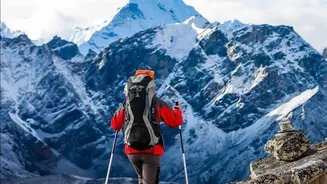



The breathtaking allure of the Himalayas draws countless adventurers, but a recent emergency rescue of six Indian hikers in Nepal serves as a stark reminder that these majestic peaks are governed by strict, non-negotiable rules.
A Costly Rescue in the High Himalayas
In early November 2026,
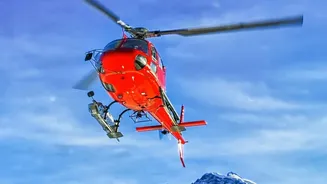
six Indian trekkers found themselves stranded in heavy snowfall in the remote Upper Dolpa region after ignoring weather warnings. The group, which included five individuals from West Bengal and one from Andhra Pradesh, had entered a restricted area at an altitude of around 4,500 metres without the mandatory permits or a licensed guide. Communication was lost until a porter with them managed to descend to a village and raise the alarm. The subsequent helicopter rescue, which cost the Nepalese government an estimated ₹10 lakh, brought the hikers to safety. Following their rescue, the trekkers were fined for their violations. Although authorities could have imposed a steeper penalty, they were each charged NPR 20,000 plus permit fees, citing their ordeal and physical condition. The incident underscored the serious consequences of flouting Nepal's trekking regulations.
Understanding Nepal’s Mandatory Guide Rule
For decades, experienced trekkers prized the freedom of hiking independently in Nepal. However, that changed in April 2023, when the Nepal Tourism Board made it mandatory for all foreign trekkers to hire a licensed guide to enter any national park or conservation area. This rule, now strictly enforced in the 2026 season, was implemented primarily for safety. Officials cite dozens of cases each year of solo trekkers going missing or facing accidents, which they believe a local guide could prevent. The policy also aims to boost the local economy by creating jobs for thousands of licensed guides and ensuring tourism revenue supports mountain communities. While some independent hikers have criticised the rule for adding cost and reducing freedom, authorities maintain it is essential for safety and accountability.
Permits and Paperwork: The TIMS Card Explained
Alongside a guide, the most crucial document for any trekker is the Trekkers’ Information Management System (TIMS) card. This card registers your identity, itinerary, and guide details with the authorities, serving as a critical safety record in case of an emergency. As of 2023, these cards can only be obtained through a government-registered trekking agency, effectively ending the era of the Free Independent Trekker (FIT). For Indian citizens from the SAARC region, the TIMS card fee is NPR 1,000, while other foreign nationals pay NPR 2,000. Attempting to trek without a valid TIMS card and the necessary national park or conservation area permits can result in significant fines and being removed from the trail. The six Indian hikers in Dolpa had neither, which complicated their situation and led to penalties.
The Rules for Restricted Areas
The incident in early November occurred in Upper Dolpa, which is designated a 'Restricted Area'. These areas, often near the border with Tibet, require special permits that are more expensive and have tighter regulations to protect their fragile environments and unique cultures. For years, a rule mandated that at least two trekkers must apply for a Restricted Area Permit (RAP) together. However, in a significant update in March 2026, this 'two-person' requirement was dropped. Solo trekkers can now get a permit for regions like Upper Mustang, Manaslu, and Dolpo, but the condition remains that they must still be accompanied by a licensed guide arranged through an agency. The rescued Indian hikers had bypassed checkpoints to enter this sensitive zone illegally, a serious offence.
What Trekkers from India Need to Know
While Indian citizens enjoy visa_free entry into Nepal, this does not exempt them from trekking regulations. All rules, including the mandatory guide policy and permit requirements, apply equally. When applying for trekking permits like the TIMS card, a passport is the preferred and often required form of identification, even if a Voter ID card was used for entry into the country. Furthermore, as of 2026, many agencies and regulations require proof of travel insurance that explicitly covers high_altitude trekking and emergency helicopter evacuation before permits will be issued. The recent incident in Dolpa highlights that a lack of insurance can complicate and delay rescue operations, putting lives at greater risk.