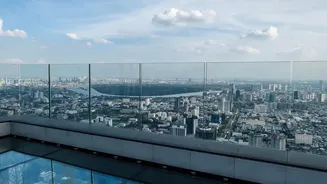







The Invisible Sway of Modern Towers
Anyone who has stood at the top of a tall building knows the view is incredible, but few consider the complex forces at play. Modern skyscrapers are designed to be flexible, allowing them to bend slightly in response to wind. This intentional sway is a crucial
safety feature, preventing the structure from becoming too rigid and brittle. However, this movement, even when too subtle to be consciously noticed, can have a physiological effect on occupants. Studies have linked this low-frequency vibration to symptoms like tiredness, difficulty concentrating, and a general sense of unease, sometimes mistaken for motion sickness. As developers push for ever-taller and more slender 'pencil towers', understanding this human factor has become more critical than ever for ensuring these marvels of engineering are also comfortable places to live and work.
The Limits of Old Evaluation Methods
For years, engineers have relied on established guidelines and predictive models to assess how much a building can move before it becomes a problem for occupants. These standards often boiled down to acceptable limits of acceleration. Testing involved wind tunnels to see how a scaled-down model would behave, or placing people on simple shaker tables that moved along a single axis (back-and-forth or side-to-side). The problem, which researchers have long suspected, is that real-world building motion is far more complex. A skyscraper doesn't just sway; it can twist, heave, and move in multiple directions at once. Furthermore, our perception of motion is influenced by many factors, including what we see and hear. Relying on simplified tests meant that designs were often based on an incomplete picture of the actual human experience high above the ground.
A New Foundation for Understanding
Enter VSimulators, a groundbreaking research facility developed by a consortium of UK universities, including Bath and Exeter. This isn't just a simple moving floor; it's a sophisticated, immersive motion simulator designed to precisely replicate the complex, multi-axis movements of a high-rise building swaying in the wind. The simulators are environmentally controlled rooms placed on powerful hydraulic or electric hexapod actuators. They can mimic not only the sway but also control the internal environment, including temperature, humidity, lighting, sound, and even smells. Paired with advanced virtual reality, these simulators can place a test subject in a virtual office or apartment on the 80th floor, allowing researchers to measure their physiological and psychological reactions to different motion profiles in a highly realistic setting.
What the Science Is Revealing
This advanced research is challenging old assumptions. By separating motion from other cues, scientists are learning that human sensitivity is more nuanced than previously believed. For instance, the way our brain integrates signals from our inner ear, our eyes, and our body's sense of position (proprioception) plays a huge role in whether we feel comfortable. Early findings suggest that certain types of combined motions—like a twist paired with a sway—may be more unsettling than simple lateral movement, even at the same level of acceleration. The research also explores how visual information, such as the movement of objects inside the room or the view of clouds rushing by, can amplify feelings of motion. This multi-disciplinary approach, combining engineering with psychology, physiology, and health sciences, provides a much richer data set on human tolerance and well-being.
Engineering a More Comfortable Future
The implications of this research are significant for the future of architecture and construction. Armed with a more accurate understanding of human perception, engineers can move beyond rigid, one-size-fits-all guidelines. This could lead to performance-based design, where buildings are fine-tuned for occupant comfort based on their specific height, shape, and location. The knowledge gained could refine the design of supplementary damping systems, like the giant tuned mass dampers and slosh tanks used in skyscrapers today to counteract movement. Ultimately, this could allow for the construction of even taller, more efficient, and more daring structures without compromising the well-being of the people inside. It marks a shift from designing buildings that are merely safe to designing buildings that actively feel good to be in.