




Beyond the Standardised Paper
In India, the image of an examination hall is uniform: rows of desks, nervous students, and a single question paper designed to test everyone in the exact same way. For decades, this has been the bedrock of our education system. But this model has a fundamental
flaw: it assumes every student reads, processes, and responds to information identically. It doesn't account for a student who reads slowly but has deep comprehension, a student with dyslexia who struggles with certain font types, or a student for whom English is a second language. The result is that we often end up testing a student's ability to navigate the test format itself, rather than their actual knowledge of the subject matter. This is where the concept of a personalised AI reading assistant enters the picture, promising not to change *what* is tested, but *how* it is presented.
How Would It Actually Work?
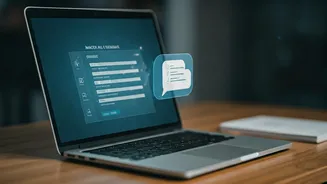
Imagine an online exam platform powered by a sophisticated AI. Before the test even begins, or during a pre-test calibration, the AI assistant would analyse a student’s reading patterns. It could measure their natural reading speed, their comprehension level with different sentence structures, and their vocabulary range. Based on this profile, it could automatically make subtle, real-time adjustments to the test format for that specific user. For a student identified as a slower reader, the AI might increase the allotted time slightly or break down long passages of text into smaller, more manageable chunks. For a student with visual processing issues, it could adjust the font, spacing, and contrast to improve readability. It could even provide on-demand definitions for non-essential vocabulary that isn't part of the core knowledge being tested, ensuring the student is being evaluated on their understanding of physics, not their memory of an obscure English word.
The Promise of Fairer Assessment
The potential benefits are enormous, particularly in a country as diverse as India. Such a system could create a more equitable playing field. Students with learning disabilities like dyslexia or ADHD, who are often at a disadvantage in traditional timed tests, could have formats adapted to their needs without requiring special paperwork or separate testing rooms. This normalises learning differences and focuses on inclusion. For students in rural areas or from different linguistic backgrounds who may be taking exams in a second or third language, the AI could simplify sentence structures without altering the complexity of the question itself. The goal is to remove the friction of the medium, ensuring the exam is a clear window into a student's knowledge, not a murky reflection of their test-taking skills. This could reduce exam-related anxiety and allow more students to perform at their true potential.
The Necessary Reality Check
While the vision is compelling, the path to implementation is filled with challenges. The most significant hurdle is equity. For this technology to work, every student needs access to a reliable device and a stable internet connection—a massive challenge in many parts of India. Without universal access, such a system would only widen the digital divide, benefiting urban, affluent students. Furthermore, there are serious concerns about data privacy and algorithmic bias. How is the student’s reading data stored and used? What if the AI incorrectly profiles a student or develops biases against certain dialects or reading patterns? The development and training of these AI models would need to be transparent and rigorously tested to ensure they are fair and culturally unbiased. Finally, there's the human element. Teachers and administrators would need extensive training not just on how to use the technology, but on how to interpret its results and integrate it into their teaching methods.