

The Kitchen Math That Fails
You've been there. A recipe promises to serve eight, but you only need to feed two. You meticulously divide every measurement by four, proud of your precision. The main ingredients like chicken or vegetables seem fine, but when you take the first bite,
the flavour is either disappointingly bland or overwhelmingly salty and spicy. This is the moment many home cooks question their skills, but the issue lies not in the execution but in a flawed assumption: that all ingredients scale linearly. While you can halve flour or meat without much trouble, seasonings like salt, spices, and acids behave very differently. They operate on a principle of concentration and perception that simple division just can’t account for, turning what should be a straightforward process into a culinary trap.
Why Seasonings Don't Follow the Rules
The science behind flavour explains why seasonings are the rebels of recipe scaling. One key factor is the relationship between surface area and volume. In a smaller pot, there is proportionally more surface area, which can cause liquids to evaporate faster. This concentrates the flavours that are left behind, including salt and spices, making them more potent than they would be in a larger batch. Furthermore, our perception of taste isn't linear. A doubled amount of salt doesn't necessarily taste twice as salty; flavour compounds interact and build on each other in complex ways. Potent spices like cayenne or cloves are particularly notorious for this. Doubling them can make a dish feel exponentially hotter, not just twice as spicy. This is why blindly following the math for seasonings often leads to an unbalanced dish.
The Golden Rule: Start Low and Go Slow
The professional secret to successfully scaling down seasonings is to abandon strict mathematical conversions. Instead, the guiding principle is to under-season at the beginning and adjust at the end. If a recipe serving eight calls for two teaspoons of salt and you're making a quarter of the recipe, don't automatically add half a teaspoon. A better approach is to start with even less—perhaps a quarter of a teaspoon—and treat that as your baseline. This leaves you 'room for final seasoning adjustments,' as the headline suggests. It is far easier to add more salt, pepper, or herbs than it is to fix a dish that has become inedible. Think of the initial amount as a starting point, not a final destination.
Trust Your Taste Buds Above All
Your most important tool for scaling recipes is not a measuring spoon or a calculator—it's your palate. The process of tasting and adjusting is where the art of cooking truly lies. Once your dish is nearing completion, take a small taste. Is it bland? Add a small pinch of salt, stir it in completely, wait a moment for it to dissolve and bloom, and then taste again. Is it lacking brightness? A tiny squeeze of lemon juice or a dash of vinegar might be what it needs. For spices, add them in the smallest possible increments, as their flavour can take a few moments to fully infuse into the dish. This iterative process of tasting and tweaking is what ensures the final flavour is perfectly balanced to your preference, regardless of the batch size.
A Practical Guide for Key Seasonings
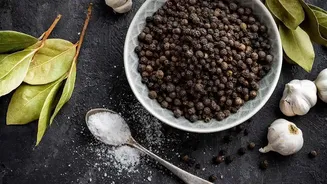
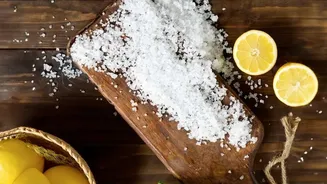
When scaling down, different seasonings require slightly different strategies. For salt, it's always best to start with less than half of the scaled amount and build from there. For potent, pungent spices like cayenne pepper, red pepper flakes, or even garlic powder, be extra cautious; their intensity can easily overwhelm a smaller dish. Start with a mere fraction of the scaled amount. Dried herbs can also become too dominant, so add them conservatively. With acidic ingredients like vinegar or citrus juice, a little goes a long way in brightening flavours, so add a few drops at a time toward the end of cooking. By treating each seasoning with this careful, taste-as-you-go approach, you move from simply following a recipe to truly understanding how to make it your own.