


What is Opposition?
In simple terms, opposition is a perfect alignment in space. It happens when Earth passes directly between an outer planet, like Saturn, and the Sun. This alignment means that from our viewpoint, Saturn is on the opposite side of the sky from the Sun. As
the Sun sets in the west, Saturn will rise in the east, making it visible all night long. This celestial event occurs once a year for Saturn and it's the time when the planet is closest to Earth, making it appear larger and more brilliant. The sunlight fully illuminates the face of Saturn we see, adding to its brightness.
Why This October is Special
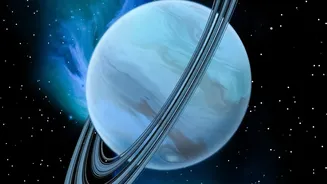
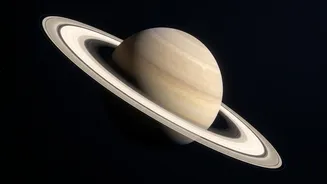
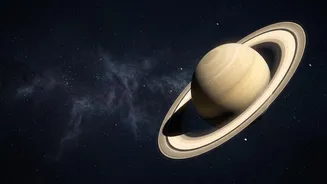
The opposition on October 4, 2026, marks the peak of a much wider viewing window. Throughout late September and all of October, Saturn will be a prominent and rewarding object in the evening sky. This year's viewing is particularly good because Saturn's famous rings are tilted towards us again after appearing nearly edge-on in 2025. The rings, composed of countless icy particles, are highly reflective and contribute significantly to the planet's brightness. This alignment provides one of the best opportunities for stargazers to get a clear look at the planet's stunning ring system.
How to Find Saturn
You don't need to be an expert astronomer to spot Saturn. To the naked eye, it will appear as a bright, steady, yellowish point of light in the sky. Unlike stars, which twinkle, planets tend to shine with a more constant glow. After sunset, look towards the eastern sky. Saturn will be located in the constellation Cetus, just below the large asterism known as the Great Square of Pegasus. The planet will climb higher as the night progresses, reaching its highest point in the sky around midnight, which is the ideal time for viewing as it minimizes atmospheric distortion.
What You Can See With Equipment
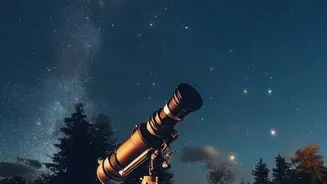
While Saturn is visible to the naked eye, its true majesty is revealed with some optical aid. High-powered binoculars might show the planet as a tiny, slightly elongated oval, hinting at the rings. However, to truly see the rings as a distinct structure, you'll need a telescope. Even a small telescope with a magnification of 25x to 50x can reveal the rings separated from the planet itself. A larger telescope, with an aperture of four to six inches, will provide a much clearer and more satisfying view, potentially even showing the Cassini Division—the famous gap between Saturn's main rings—on a night with steady air. You might also spot its largest moon, Titan, which looks like a nearby faint star.
Tips for the Best Experience
To make the most of your Saturn-gazing session, try to find a location away from bright city lights. Light pollution can wash out fainter objects, though a bright planet like Saturn is still visible from urban areas. Give your eyes about 15 to 20 minutes to fully adapt to the darkness, which will help you see more detail. If you're using a telescope, allow it to adjust to the outside temperature to prevent distorted views. While not essential, stargazing apps on your smartphone can be a great help in pinpointing Saturn's exact location in the constellations. If you don't own a telescope, check with local astronomy clubs or planetariums, as many host public viewing nights, especially for major events like an opposition.