







From Spectators To Future Scientists
For decades, the Indian Space Research Organisation (ISRO) has been a source of national pride, with its successful launches and interplanetary missions capturing the imagination of millions. Traditionally, the public, especially students, have been enthusiastic
spectators. However, a significant strategic shift is underway. ISRO is no longer just showcasing its achievements; it is actively recruiting the country's youngest minds to become future participants. The goal is to transform passive admiration into active engagement, ensuring India's space-faring future is powered by a homegrown, passionate, and skilled workforce. This new push involves a suite of structured initiatives designed to embed space science into the educational landscape from an early age.
Catching Them Young: YUVIKA
At the forefront of this new approach is the “YUva VIgyani KAryakram” (YUVIKA), or Young Scientist Programme. This flagship initiative is ISRO's way of “catching them young,” as the organisation itself puts it. YUVIKA is a two-week residential program designed for students who have completed Class 9. Selected students from every state and union territory are invited to one of ISRO's centres across the country. The experience is immersive: they attend lectures by senior scientists, get hands-on experience with activities like model rocketry and satellite assembly kits, and witness live demonstrations. The entire program is fully sponsored by ISRO, covering all costs for the selected students, with a special preference given to those from rural areas to ensure inclusivity.
Bringing Space To The Streets
Understanding that not every student can travel to an ISRO facility, the organisation has also launched the “Space on Wheels” initiative. This mobile exhibition, housed within a bus, travels to schools and communities across the country, particularly in remote and regional areas. The bus is packed with scale models of ISRO’s famous rockets like the PSLV and GSLV, and satellites from missions like Chandrayaan and Mangalyaan. It provides thousands of students with a firsthand look at the hardware that powers India's space dreams. This initiative effectively democratises access to space education, sparking curiosity and scientific temper in students who might otherwise never have such an opportunity.
Solving Real Problems: Robotics and Satellite Challenges
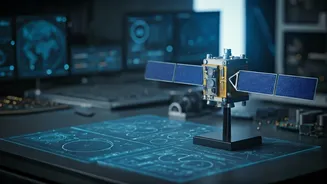
For older students at the university level, ISRO is throwing down the gauntlet with high-level competitions. The ISRO Robotics Challenge (IRoC) invites student teams to design and build rovers and drones capable of tackling challenges inspired by real-life interplanetary missions, like navigating the Martian surface without GPS. Winning solutions have a real chance of being incorporated into future ISRO missions. Furthermore, under the Student Satellite Programme, university teams receive mentorship and financial support to design, build, and launch their own satellites on ISRO rockets. These initiatives go beyond theoretical knowledge, giving students invaluable hands-on experience in solving complex engineering problems and contributing directly to India's space ecosystem.
The Grand Strategy
This multi-pronged outreach is not merely a public relations exercise. It is a crucial long-term strategy for nation-building. By igniting a passion for science, technology, engineering, and mathematics (STEM) at a young age, ISRO is creating a robust talent pipeline essential for its increasingly ambitious future missions. Programmes like YUVIKA and the various challenges are designed to foster a culture of scientific inquiry and innovation. Union Minister Jitendra Singh noted that these initiatives are part of a commitment to democratise access to space technology, ensuring students from all corners of India, including smaller towns, can contribute. By engaging students as active partners, ISRO is ensuring that its future will be as bright as its celebrated past.