





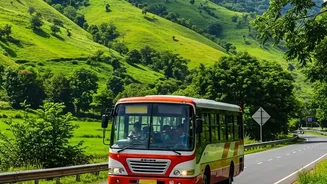


The best road trips are more than just the fastest way to get from A to B. They are about the joy of the journey itself. This guide will show you how to swap the highway for the byway and plan a memorable adventure packed with scenic stops.
Start With Your 'Anchors'
Before you
even look at a map, brainstorm your 'must-see' list. These are your 'anchor' stops—the destinations that are the primary reason for your trip. This could be a specific national park, a city you have always wanted to visit, or a restaurant a friend recommended. Don't worry about logistics yet; just gather your ideas. Once you have a list, plot them on a map. Seeing them visually will help you spot logical clusters and the natural flow of a potential route. This list forms the backbone of your journey, around which you will weave your scenic detours.
Embrace the Scenic Route
The fastest route is rarely the most interesting. The magic of a great road trip lies in the detours and backroads. Actively look for alternatives to the main highways. Use mapping tools to find designated scenic byways or 'All-American Roads', which are selected for their intrinsic archaeological, cultural, historic, natural, recreational, or scenic qualities. Many travel planning apps and websites are designed specifically to help with this. Instead of just setting your GPS to 'fastest route', explore its settings for options to avoid highways or tolls, which can often guide you through more interesting landscapes and small towns.
Use the Right Digital Tools
While Google Maps is essential for navigation and live traffic, supplement it with specialised road trip planners. Apps like Roadtrippers are excellent for discovering quirky roadside attractions, points of interest, and hidden gems along your route. You can input your start and end points and filter for categories like 'outdoors', 'history', or 'quirky attractions'. Other resources like Roadside America specialise in the unusual and offbeat. For Indian travellers, apps like Mappls provide detailed local navigation, while AI-powered planners can help generate initial itineraries based on preferences like 'scenic detour' or 'budget stays'. Using a combination of tools gives you both navigational certainty and a wellspring of inspiration.
Plan Your Pace, Not Just Your Path
One of the most common planning mistakes is over-scheduling. A route packed with too many stops can turn a relaxing adventure into a stressful race against the clock. When planning, think in terms of driving hours, not just distance. A good rule of thumb is to budget for around five hours of driving on days you also plan to do significant sightseeing. This leaves ample time for spontaneous stops, long lunches, or simply enjoying a beautiful viewpoint. Remember that a travel day is not a sightseeing day; if you are moving between major destinations, make that the day's primary focus. Building buffer time into your schedule is crucial for a low-stress trip.
Connect the Dots and Stay Flexible
Once you have your anchors and a rough idea of your route, it's time to connect the dots. Book accommodations, especially in popular areas or during peak season. For multi-stop trips, it often makes sense to book your main transport first (like long-haul flights), followed by inter-city travel, and then accommodations, as hotels often have more flexibility. As you book, create a master itinerary with confirmation numbers, addresses, and key timings. But remember, the point of a good plan is not to be rigid; it's to provide a structure that allows for happy accidents. Talk to locals at cafes or rest stops—they often know the best-kept secrets that you will not find in any guidebook.