


The Appeal of the Perfected Garden
Let’s be clear: there is a genuine, meticulous beauty to a world-class floral exhibition. Think of the RHS Chelsea Flower Show in London or the Singapore Garden Festival. These are temples of horticulture, where human ingenuity, patience, and artistry
are on full display. Every petal seems perfectly placed, every colour combination is deliberate, and every landscape is a masterclass in design. They are showcases of what is possible when human hands collaborate with nature under controlled conditions. Visitors come to be inspired, to learn about new species and gardening techniques, and to admire the sheer dedication it takes to create these temporary paradises. They offer a reliable, accessible, and often breathtaking dose of floral beauty, compressed into a manageable space and time.
The Soul of the Wild Bloom
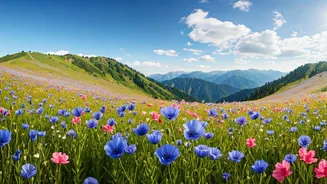
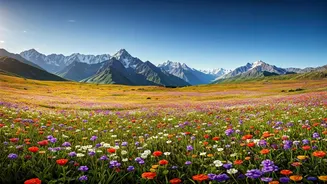
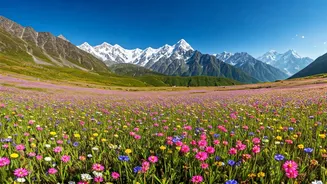
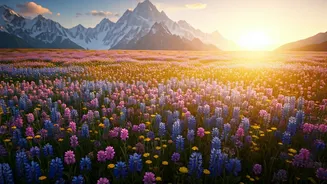
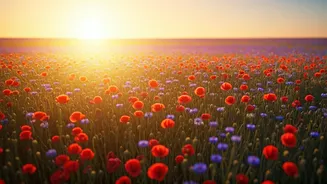
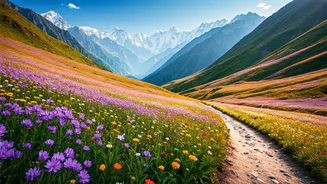
And then there is peak bloom. This is not an event you can pencil into a calendar a year in advance. It is a phenomenon, a pilgrimage. It is the cherry blossoms (sakura) blanketing Japan, an event so profound it is woven into the nation’s cultural fabric. It is the vibrant bluebells carpeting an ancient English wood, or a 'superbloom' turning the arid deserts of California into an impressionist painting. In India, it is the legendary Valley of Flowers in Uttarakhand, a Himalayan meadow that erupts in a carpet of hundreds of species of alpine flowers for a few short weeks after the monsoon. This is not a garden; it is an ecosystem roaring to life. The beauty here is not in its perfection, but in its overwhelming, untamed abundance.
Scale, Scent, and Spontaneity
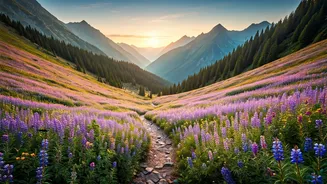
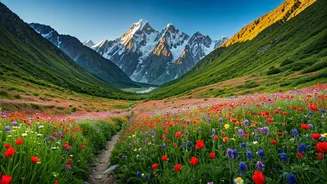
The fundamental difference lies in the experience. A floral exhibition is a visual treat you walk through. A peak bloom is an environment you are immersed in. At a show, you admire a display. In the Valley of Flowers, you are surrounded by millions of blooms stretching to the horizon, with snow-capped peaks as a backdrop. The air is not just perfumed; it is thick with the scent of wild flora, damp earth, and clean mountain air. The scale is something no exhibition hall can replicate. It’s the difference between seeing a photograph of the ocean and standing on the shore as the waves crash at your feet. The former is beautiful, but the latter is a full-body, sensory experience that connects you to something vast and powerful.
The Currency of Experience
Formal exhibitions, by their nature, are commercial ventures. There are tickets, timed entries, sponsors, and stalls selling merchandise. The experience is curated and, to a degree, commodified. In contrast, while accessing remote natural sites can involve travel costs and park fees, the bloom itself is free from commerce. It is not there *for* you. It simply *is*. This lack of artifice is its greatest strength. The unpredictability—dependent on rainfall, temperature, and a dozen other natural cues—makes witnessing it feel like a privilege, a stroke of good fortune. You haven't just bought a ticket; you've answered nature's call at the right moment. This element of chance and discovery makes the reward feel infinitely greater.
Effortless Superiority
The headline’s claim of 'effortless' performance is the key. A floral exhibition is the result of immense human effort: planning, propagating, transporting, and arranging. It is beautiful *because* of that effort. A peak bloom is effortless only from a human perspective. It is the culmination of millions of years of evolution, a complex ecological dance that unfolds without any human director. It doesn't need our approval, our judges, or our awards. Its performance is for its own survival, and in that raw, biological imperative lies a beauty that is more authentic and humbling than anything we could ever design. It reminds us that we are merely visitors in a world of breathtaking natural spectacles, not their creators.