


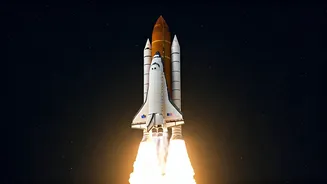


What is the Gaganyaan Mission?
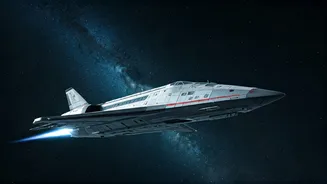
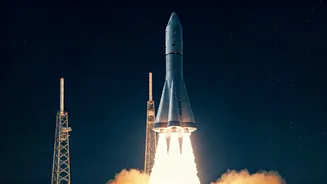
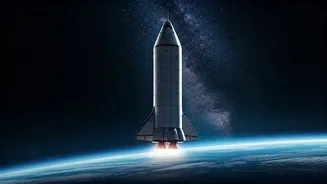
At its heart, Gaganyaan is India's first human spaceflight program. The primary objective is to demonstrate the capability to send a crew of up to three astronauts into a 400-kilometre Low Earth Orbit for a mission lasting up to three days and bring them
back safely to Earth. This landmark mission, spearheaded by the Indian Space Research Organisation (ISRO), will make India the fourth country in the world—after Russia, the United States, and China—to have an independent human spaceflight capability. The programme is not just about sending people to space; it's a national endeavour expected to boost Indian industry, create around 15,000 jobs, and inspire a new generation in science and technology.
The Crucial Test Phase
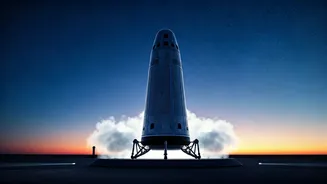
Before any astronaut boards the spacecraft, ISRO is conducting a battery of tests to ensure every system is perfect, with crew safety as the absolute top priority. The headline-making events are a series of uncrewed flights and specific subsystem tests. The first uncrewed flight, G1, is slated for the second half of 2026 and will carry a humanoid robot named Vyommitra to test life support and other systems. A key part of this testing regime is the Integrated Air Drop Test (IADT), which validates the complex parachute system needed for the Crew Module's safe return. After a successful first test (IADT-01) in August 2025, ISRO completed the second test (IADT-02) in April 2026, dropping a simulated module from a helicopter to verify the sequenced deployment of 10 different parachutes. These tests, along with Pad Abort Tests (to test the emergency escape system on the launchpad) and Test Vehicle flights, are methodical steps to build confidence in the system before the first crewed flight, which is anticipated in 2027.
Engineering for Human Safety
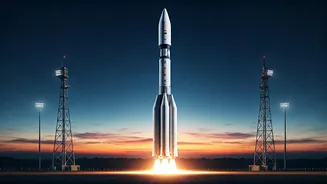
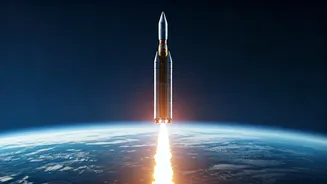
Sending humans to space and bringing them back is exponentially more challenging than launching satellites. The GSLV Mk III rocket, ISRO's most powerful launcher, has been modified to be 'human-rated', meaning it requires a reliability of 98% or higher. A critical component is the Crew Escape System (CES), which can jettison the crew module away from the rocket in case of an emergency during launch. This system must work flawlessly. Another major challenge is creating an Earth-like environment within the capsule's Crew Module, providing life support, and protecting the crew from the harsh conditions of space. Finally, the re-entry and splashdown phase is perilous; the module must withstand extreme temperatures and decelerate safely from over 216 m/s to less than 11 m/s for a gentle landing in the sea.
Meet the Vyomanauts
The human face of the mission features four decorated Indian Air Force test pilots: Group Captains Prasanth Balakrishnan Nair, Ajit Krishnan, Angad Pratap, and Shubhanshu Shukla. These astronaut-designates, who will be known as 'Vyomanauts' (from the Sanskrit word 'Vyoma' for space), have undergone extensive training, including a stint in Russia and ongoing training at ISRO's facility in Bengaluru. Their preparation involves everything from spacecraft systems and survival techniques to mission simulations. Group Captain Shubhanshu Shukla also gained valuable experience flying to the International Space Station in 2025 on the commercial Axiom Mission 4, conducting several microgravity experiments.
Why This Mission is a National Priority
Gaganyaan is more than a single mission; it's a catalyst for India's future. Success will not only bring immense national prestige but also spur significant technological and industrial growth. Around 60% of the mission's components are expected to be sourced from the Indian private sector, boosting domestic manufacturing. The mission will also provide a unique platform for scientific research in areas like materials science and biology in a microgravity environment. Strategically, Gaganyaan is a stepping stone for India’s larger space ambitions, which include building the Bharatiya Antariksh Station (Indian Space Station) by 2035 and landing an Indian on the Moon by 2040.