

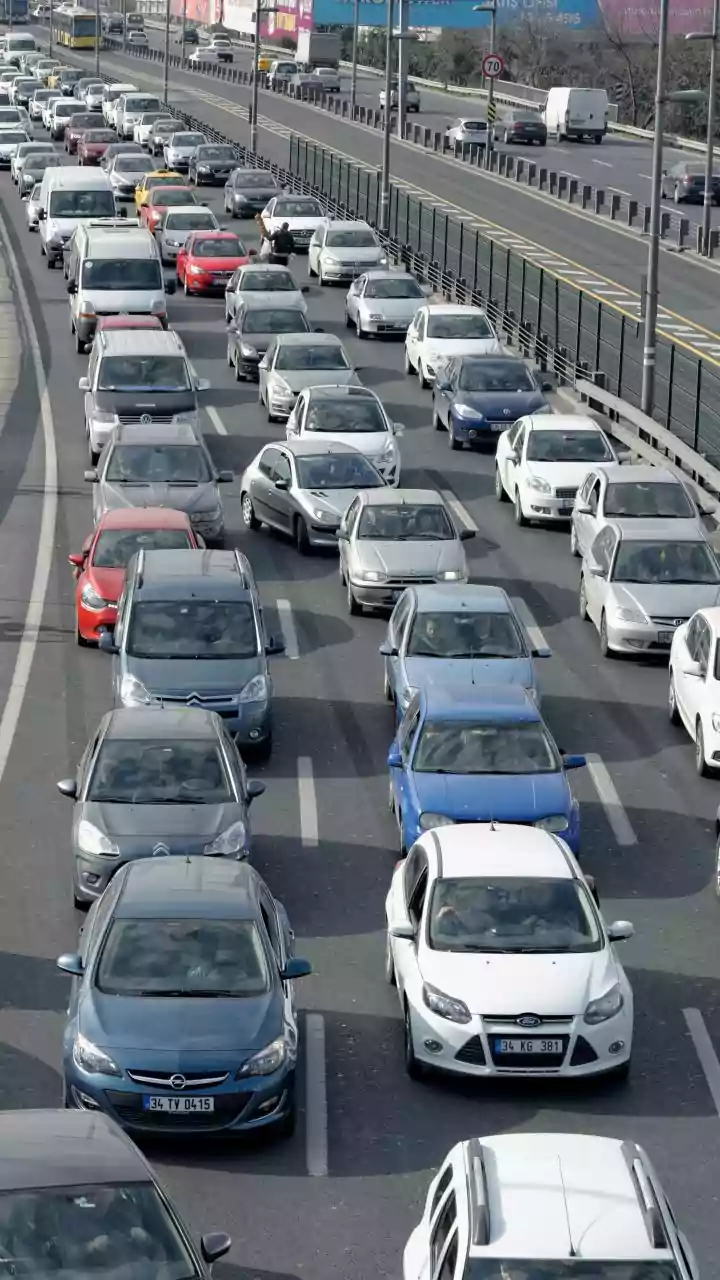



What are the Proposed BS-VII Norms?
The Ministry of Road Transport and Highways (MoRTH) has released draft notifications for the next generation of emission standards, known as BS-VII. This comes after the nationwide implementation of BS-VI in April 2020, which made significant strides
in curbing tailpipe pollutants. The new BS-VII rules are proposed to be rolled out in a phased manner, starting with passenger cars from April 1, 2029, followed by light commercial vehicles in 2030, and heavy-duty trucks and buses in 2031. The regulations will be progressively tightened in further phases planned for 2031, 2032, and 2035. The government has invited public feedback on the draft before finalising the rules.
A Groundbreaking Shift: Beyond the Tailpipe
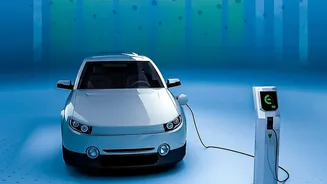
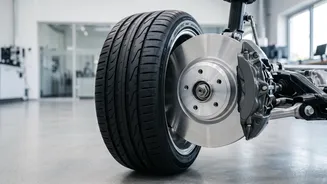
The most significant change in the BS-VII proposal is the focus on non-exhaust emissions. For decades, pollution control has targeted harmful gases and particulate matter (PM) coming from a vehicle's exhaust. However, the new rules acknowledge that a substantial amount of pollution comes from other sources: the abrasion of brake pads and the wear and tear of tyres. These 'non-exhaust emissions' release fine particulate matter into the atmosphere, contributing to air pollution. This is a crucial development, especially with the rise of electric vehicles (EVs). While EVs have zero tailpipe emissions, they still generate particulate matter from their brakes and tyres.
New Limits for Brake and Tyre Wear
Under the draft rules, specific limits for brake-particle emissions will be introduced from April 2031 for passenger cars. The proposed limit for pure electric vehicles is 3 milligrams per kilometre (mg/km), while for internal combustion engine cars, hybrids, and other powertrains, it is 7 mg/km. This initial difference acknowledges that EVs can use regenerative braking, which reduces wear on conventional friction brakes. However, the rules propose a unified, stricter limit of 3 mg/km for all passenger vehicles from April 2035. Regulations for tyre abrasion are also part of the proposal, set to begin from 2031, though the exact numerical limits are to be notified separately.
Why This Change Matters for Air Quality
Targeting brake and tyre wear is a forward-thinking step aligned with global standards like Europe's Euro 7 norms. Studies have shown that non-exhaust emissions are a major source of PM2.5 and PM10 particles, which are fine enough to enter our lungs and bloodstream, causing significant health problems. As vehicle fleets become cleaner in terms of exhaust fumes, the relative contribution of brake and tyre dust to overall traffic pollution increases. By regulating these sources, the government aims to tackle a persistent and often overlooked aspect of urban air quality challenges, making the air cleaner for everyone, irrespective of a car's powertrain.
Impact on Automakers and Car Buyers
These new regulations will require significant technological advancements from automakers. They will need to invest in research and development for advanced braking systems and low-wear tyre materials. The proposal also includes stricter real-world driving emission tests and onboard monitoring systems to ensure compliance throughout a vehicle's life, not just in a lab. For consumers, this translates to cleaner, more environmentally friendly cars. However, these technological upgrades will likely increase the production cost of vehicles, which could lead to higher prices for new cars. Automakers have already flagged concerns about the proposed timelines, warning it could disrupt product launches and divert resources.