



The Jewel of the Solar System
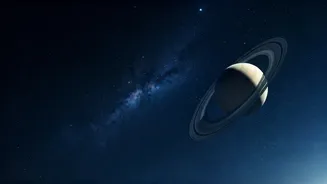
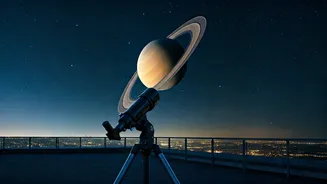
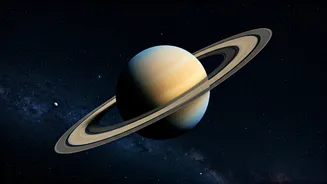
To the naked eye, Saturn appears as a bright, golden point of light, the farthest planet from Earth that ancient astronomers could see without aid. Its calm, unwavering glow sets it apart from the shimmering stars. But even a small, backyard telescope
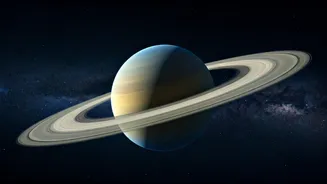
transforms this dot into a breathtaking spectacle: a perfect orb, elegantly clasped by its world-famous rings. This sight is often a gateway moment for amateur astronomers, a gasp-inducing vision that turns a casual glance into a lifelong passion for the cosmos. Saturn is the second-largest planet in our solar system, a gas giant made mostly of hydrogen and helium. It's so vast that you could fit more than 760 Earths inside it, yet it's the only planet with an average density less than water. If you could find a bathtub big enough, Saturn would float.
A Masterpiece of Rings
Saturn's rings are its most defining feature, an accessory of cosmic proportions. But they are not solid. Instead, they are a colossal, swirling disc made of billions of individual particles of water ice, mixed with a sprinkling of rock and dust. These particles range in size from tiny grains to chunks as large as mountains. While the ring system stretches out for hundreds of thousands of kilometres, it is astonishingly thin—in most places, no thicker than 100 meters. This incredible scale makes them seem to almost disappear when we view them edge-on from Earth, a phenomenon that puzzled early astronomers like Galileo. Scientists believe the rings are relatively young, perhaps only 100 million years old, and may have formed from the debris of a shattered moon torn apart by Saturn's immense gravity.
A Solar System in Miniature
Beyond its rings, Saturn is the anchor of a complex system of more than 200 moons, making it a miniature solar system all on its own. Two of its moons, in particular, stand out as worlds of immense scientific interest. Titan, the largest, is bigger than the planet Mercury and is the only moon in our solar system with a thick atmosphere, one even denser than Earth's. It features a landscape of rivers, lakes, and seas—not of water, but of liquid methane and ethane. Then there is Enceladus, a small moon covered in brilliantly white ice, making it one of the most reflective objects in the solar system. More excitingly, this tiny world hides a global saltwater ocean beneath its icy shell, which erupts into space through giant geysers, feeding one of Saturn's outer rings. The presence of water and organic chemicals makes Enceladus a prime target in the search for life beyond Earth.
How to See Saturn This Month
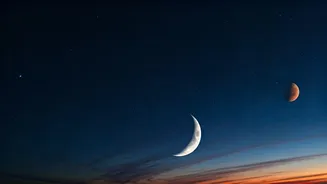
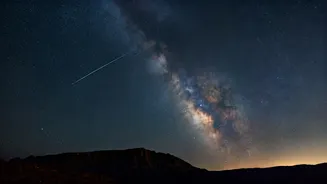
You don't need a space mission to appreciate Saturn's beauty. July 2026 offers increasingly good opportunities for sky-watchers in India. The planet will be visible in the pre-dawn sky, rising in the east. Early in the month, you’ll have to be patient, as it will be low on the horizon. But on the mornings of July 7 and 8, the Moon will pass nearby, providing an easy marker to help you find the planet. Your best chance for a stunning view comes at the end of the month. By July 31, Saturn will be higher in the sky before sunrise, away from the atmospheric haze near the horizon, making for a steadier and clearer view. While visible to the naked eye as a bright, steady star, even a modest 75mm telescope will reveal what makes Saturn so special: the rings. After being nearly edge-on in 2025, the rings are now tilted towards us again, making them a spectacular sight.