

Titan: An Earth-Like Oddity
Before diving into the hardware, it's worth remembering why Titan is such a compelling destination. It is the only moon in our solar system with a dense atmosphere and the only celestial body besides Earth with stable liquid on its surface. However, at a bone-chilling
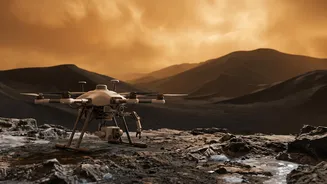
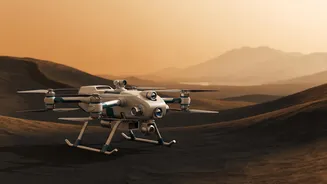
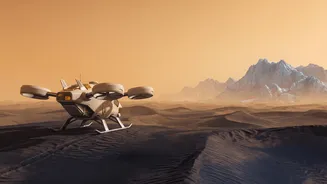
-179°C, Titan's rivers, lakes, and seas are filled with liquid methane and ethane, not water. Its surface is a landscape of water-ice bedrock and dunes of organic sediment. This unique environment, with its complex carbon-rich chemistry, makes Titan a prime target for studying how far prebiotic chemistry—the steps leading to life—can progress. Dragonfly's goal is to explore this natural laboratory, flying between dozens of promising locations to analyse the ingredients for life.
The Chemical Detective: DraMS
At the heart of the mission is the Dragonfly Mass Spectrometer, or DraMS. This is the primary instrument for identifying the chemical composition of Titan's surface. To get samples, the lander is equipped with a drill system called DrACO (Drill for Acquisition of Complex Organics), which will bore into the surface and pneumatically deliver the material to DraMS. Once inside, DraMS will heat the samples to identify their chemical components. Its main objective is to search for biosignatures and investigate compounds relevant to life, such as amino acids, which are the building blocks of proteins. By studying different geological sites, scientists hope to find places where liquid water from impacts or cryovolcanic flows might have mixed with Titan's abundant organic materials.
The Geologist and Weatherman: DraGNS and DraGMet
To understand the broader context of its chemical findings, Dragonfly carries two key instrument packages. The Dragonfly Gamma-Ray and Neutron Spectrometer (DraGNS) will determine the bulk composition of the ground beneath the lander without even touching it. It works by bombarding the surface with neutrons and reading the gamma rays that are emitted back, allowing scientists to identify elements like carbon, hydrogen, nitrogen, and oxygen. This helps characterise the landing sites and provides crucial context for the samples analysed by DraMS. Meanwhile, the Dragonfly Geophysics and Meteorology package (DraGMet) acts as a portable weather station and geological tool. It will measure wind, pressure, and temperature, which is essential for safe flights in Titan's dense atmosphere. DraGMet also includes a seismometer to detect “Titanquakes,” which could reveal details about the moon’s crust and the depth of its subsurface liquid water ocean.
The Eyes of the Drone: DragonCam
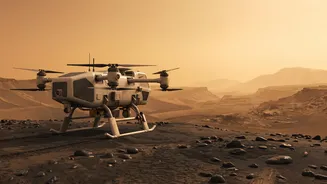
A flying mission needs excellent vision. The DragonCam suite consists of several cameras designed for different purposes. Panoramic cameras will provide sweeping views of the Titan landscape from each landing site, while forward-looking cameras will help the ground team scout for future landing zones and navigate around obstacles during flight. A pair of microscopic imagers will provide highly detailed, close-up views of the surface texture and composition right where the lander sits. These images will not only offer breathtaking visuals but will be crucial for understanding the geological processes that shape Titan’s surface, from its vast dunes to the edges of impact craters like Selk Crater, a key mission destination. These cameras work together to ensure Dragonfly can safely hopscotch across the moon while documenting its journey in incredible detail.