


So, What Exactly Is a SmallSat?
Forget the classic image of a satellite the size of a city bus, painstakingly built over a decade. A SmallSat, or small satellite, is any spacecraft with a mass under 500 kilograms. They range from 'minisatellites' (100-500 kg) down to 'nanosatellites'
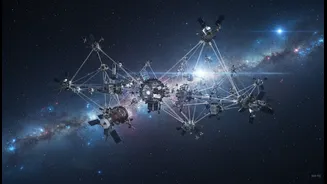
and 'CubeSats,' which can be as small as a 10-centimetre cube. This downsizing is made possible by the same revolution that put a supercomputer in your pocket: the miniaturization of electronics, processors, and sensors. Instead of one massive, multi-purpose satellite, companies and countries can now launch constellations—large networks of smaller, coordinated satellites—to achieve their goals, often with better coverage and resilience. If one fails, the network isn't compromised, and a replacement is far cheaper and faster to launch.
The Revolution in Cost and Speed
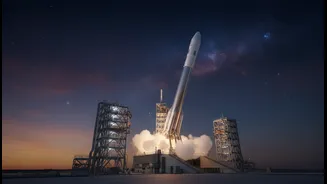
The primary reason SmallSats are 'winning' is economics. Traditional satellites are incredibly expensive to build and launch. In contrast, SmallSats use standardized parts and have much shorter development cycles, drastically cutting down manufacturing costs and time. But the real game-changer is the launch. Because they are so small and light, SmallSats can 'rideshare' on rockets carrying a larger primary payload, effectively splitting the bill for a ride to orbit. This has dramatically lowered the barrier to entry, making space accessible not just to superpowers but to universities, startups, and smaller nations. This affordability allows for more risk-taking; testing new, unproven technology is far more palatable when the potential financial loss is a fraction of what it once was.
A New Universe of Applications
With accessibility comes a flood of innovation. While large satellites still handle critical missions like deep-space exploration, SmallSats dominate Low Earth Orbit (LEO) and are enabling a host of new services. The most visible are the massive communication constellations providing global broadband internet, even in remote areas. Beyond connectivity, Earth observation is a booming sector. Fleets of SmallSats provide high-resolution imagery and data for everything from agriculture (monitoring crop health) and disaster management to tracking shipping routes and monitoring environmental changes with unprecedented frequency. This shift is creating a massive market for data analytics, turning raw satellite images into actionable insights for businesses and governments.
India's Stake in the SmallSat Boom
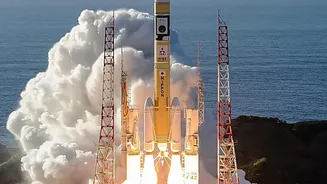
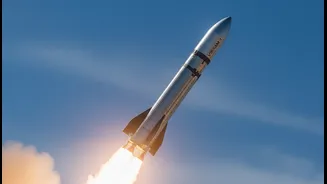
India is emerging as a crucial player in this new space economy. The Indian Space Research Organisation's (ISRO) Polar Satellite Launch Vehicle (PSLV) has long been a reliable and cost-effective workhorse for launching small satellites for international clients. To specifically target this growing market, ISRO has developed the Small Satellite Launch Vehicle (SSLV), designed for quick, on-demand launches. The national scene is also buzzing with private startups. As of 2026, India is home to over 400 space startups. Companies like Pixxel are building constellations for hyperspectral imaging, while Dhruva Space is manufacturing satellite platforms. Rocket builders like Skyroot Aerospace and Agnikul Cosmos are developing private launch vehicles, creating a complete domestic ecosystem. This boom, supported by government policy and foreign investment, is projected to grow India's space economy significantly in the coming years.
Is the Old Space Race Over?
The rise of SmallSats doesn't mean the end of large, ambitious government missions. Rather, the space race has split into two tracks. The traditional race for national prestige, scientific discovery, and deep-space exploration continues. But a new, arguably more dynamic and economically significant race is happening in LEO, and it's a commercial one. SmallSats are the undisputed champions here, driving a market projected to be worth tens of billions of dollars. They are not just winning; they are rewriting the rules of the game, making space a more crowded, competitive, and commercially vibrant domain than ever before.