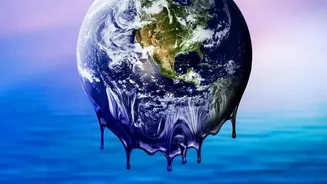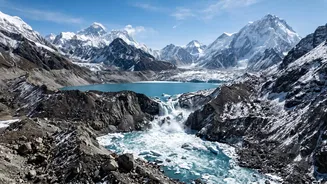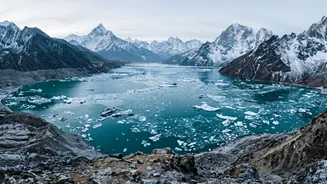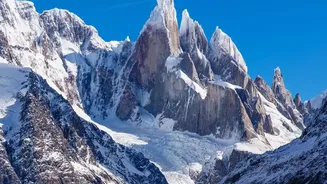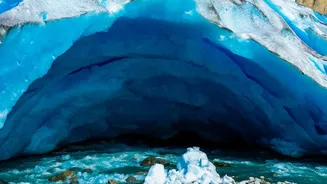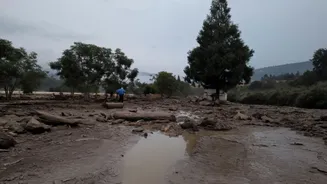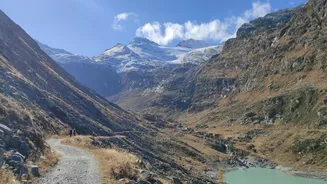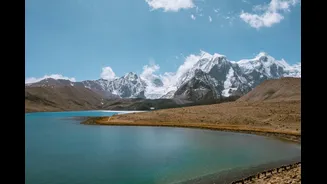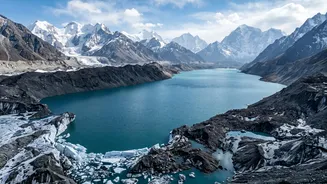






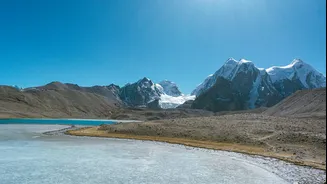
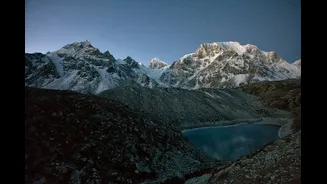
The majestic Himalayas, the source of our life-giving rivers, are sending a dire warning. Recent UN-backed reports confirm that melting glaciers are creating a severe and growing threat: catastrophic glacial lake outburst floods, or GLOFs.
A Ticking Time Bomb in the Mountains
Imagine a massive,
unstable bathtub held in place by a weak wall of loose rock and ice. This is a glacial lake. As climate change warms the planet, Himalayan glaciers are melting at an alarming rate, pouring vast amounts of water into these high-altitude lakes. A Glacial Lake Outburst Flood (GLOF) happens when the fragile moraine or ice dam holding this water back suddenly fails. This can be triggered by a landslide, an earthquake, or even the pressure of the ever-growing lake itself. The result is a sudden, violent release of millions of cubic metres of water, rock, and debris, surging down mountain valleys with unimaginable force and speed, often with little to no warning.
The UN's Grave Warning
A series of reports from UN bodies and associated climate science initiatives released ahead of the upcoming COP31 climate conference paint a grim picture. Reports like the 'State of the Cryosphere 2026' and findings from the UN Environment Programme (UNEP) confirm that the increasing frequency of GLOFs is a direct consequence of a warming world. These assessments highlight that the Hindu Kush Himalaya region is a global hotspot for GLOF risks. Shockingly, one study found that while India ranks third in the number of GLOF events in the region, it has suffered the highest number of deaths, with over 6,000 fatalities recorded between 1835 and 2025. This underscores the extreme vulnerability of communities living downstream.
India on the Frontline
For India, this is not a distant threat. It is a clear and present danger to states like Sikkim, Uttarakhand, Himachal Pradesh, and the union territories of Jammu & Kashmir and Ladakh. The devastating 2023 GLOF in Sikkim, which originated from the South Lhonak Lake, is a tragic reminder of the scale of destruction. That event affected nearly 80,000 people, caused dozens of deaths, and resulted in infrastructure losses estimated at around ₹1,480 crore. Hydropower projects, roads, bridges, and entire settlements concentrated along river valleys are directly in the path of these potential disasters, magnifying the human and economic risk.
What 'Urgent Adaptation' Really Means
The UN reports strongly emphasise the need for 'urgent adaptation'. This isn't just about reducing emissions; it's about preparing for the climate impacts that are already unavoidable. In the context of GLOFs, adaptation means a multi-pronged approach. First, it requires robust, 24/7 monitoring of potentially dangerous glacial lakes using a combination of satellite imagery and on-the-ground sensors. Second, it involves creating and testing effective early warning systems (EWS) that can deliver timely alerts to downstream communities. Third, in some high-risk cases, it could mean engineering solutions like controlled drainage to lower lake levels. Finally, it means smarter land-use planning to avoid construction in high-risk zones and building community preparedness through awareness and evacuation drills.
The Path Forward: From Warning to Action
While initiatives like the National Disaster Management Authority's (NDMA) work on GLOF risk mitigation are underway, experts and the UN reports stress that the scale and speed of action need a massive upgrade. A major hurdle is the vast funding gap. UNEP's 'Adaptation Gap' reports consistently show that the money required by developing nations to build resilience far exceeds the international climate finance currently available. For India, which sources the vast majority of its adaptation finance domestically, this is a monumental challenge. Strengthening transboundary cooperation with neighbouring countries like Nepal, Bhutan, and China is also critical, as many river basins and the risks associated with them cross national borders.