





Sunsetting an Icon
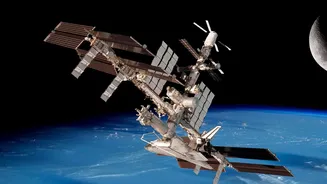
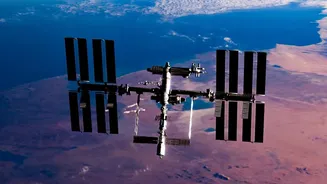
The International Space Station stands as a monumental achievement in global cooperation and scientific endeavor. Since 2000, it has hosted thousands of experiments and served as a home for astronauts from numerous countries. However, after three decades
of continuous operation, the aging orbital laboratory is facing structural fatigue and rising maintenance costs. NASA plans to decommission the ISS around 2030, culminating in a controlled deorbit into a remote area of the Pacific Ocean. Rather than building another government-funded successor, NASA is championing a new, more commercially driven approach to ensure a continuous human presence in space.
From Operator to Customer
NASA's strategy hinges on a fundamental role change: from being the owner and operator of a space station to becoming just one of many customers. Through its Commercial Low-Earth Orbit Destinations (CLD) program, the agency is seeding private industry with funding to develop a new generation of commercial space stations. The goal is to stimulate a robust LEO economy where NASA can lease space and purchase services for its astronauts and research needs. This landlord-tenant model is expected to be more cost-effective for taxpayers and will free up NASA resources to focus on deep-space exploration, such as the Artemis missions to the Moon and Mars, while ensuring the United States does not lose its foothold in LEO.
Meet the New Landlords of Space
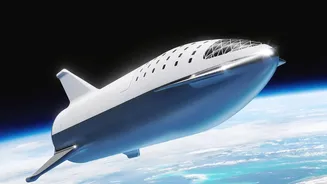
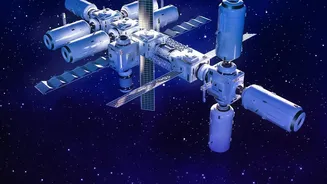
Several companies are racing to build the orbital real estate of the future. Axiom Space is a frontrunner, already flying private astronaut missions to the ISS. Its strategy involves first attaching its own modules to the ISS, starting around 2027, before detaching to become a free-flying station called Axiom Station. Another major contender is Orbital Reef, a joint venture from Blue Origin and Sierra Space, envisioned as a "mixed-use business park" in space. It will utilize Sierra Space's innovative Large Integrated Flexible Environment (LIFE) habitats, which are inflatable modules that launch compactly and expand to three-story structures in orbit. The Starlab station, from a joint venture including Voyager Space and Airbus, is designed to launch on a single flight aboard a super heavy-lift rocket like SpaceX's Starship and become a hub for science and research.
A New Economy Beyond Government Science
The true promise of this new era lies in the diversification of who goes to space and why. These commercial stations won't just host NASA astronauts. Their business models are built on serving a wide range of customers. This includes space tourism for wealthy adventurers, missions for foreign space agencies, and a revolutionary new frontier for private industry. Companies are eager to conduct research and development in the unique microgravity environment, which has promising applications for everything from manufacturing flawless fiber-optic cables and 3D-printing human organs to developing new pharmaceuticals. These stations will function as orbital laboratories, factories, and even hotels, creating a vibrant, self-sustaining economy in orbit.
An Uncharted Commercial Frontier
Despite the immense promise, the path forward is not without significant challenges. A major question is whether the business case for these commercial outposts is truly sustainable without NASA as an anchor tenant. The technical hurdles of building and operating a space station are immense, and ensuring crew safety is paramount. The recent volatility in NASA's own strategy for the CLD program, which saw a brief and controversial pivot in early 2026 before returning to the original plan, highlights the policy and funding uncertainties that these companies face. Successfully navigating the transition from the ISS era to a fully commercial LEO ecosystem will require a delicate balance of public support and private innovation to avoid a gap in U.S. orbital presence.