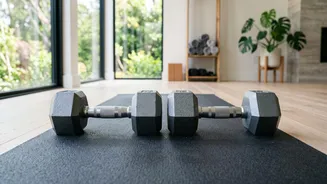








In the constant tug-of-war between a busy schedule and fitness goals, time is the resource we never have enough of. But what if the key to consistency isn't finding more time, but using less of it? Enter the 20-minute workout.
Escaping the All-or-Nothing Trap
Many of us fall into the
'all-or-nothing' mindset: if we can't fit in a full hour at the gym, we do nothing at all. This perfectionism is the enemy of progress. The psychological barrier to starting a 60-minute workout is significant—it requires planning, travel time, and a large energy commitment. A 20-minute session, however, feels infinitely more manageable. Psychology shows that the secret to long-term success isn't motivation, which ebbs and flows, but habit. By lowering the barrier to entry, a short workout makes it easier to build a routine. Research on habit formation shows that consistency is far more important than duration, especially in the beginning. A short, daily session creates a powerful habit loop—cue, routine, reward—that wires the behavior into your brain, making it automatic over time.
The Science of a Shorter Sweat Session
Don't mistake 'short' for 'ineffective'. The physiological benefits of a 20-minute workout are substantial, especially when the intensity is high. This approach, known as High-Intensity Interval Training (HIIT), involves short bursts of maximum effort followed by brief recovery periods. Studies show that 20 minutes of intense exercise can provide similar, and sometimes superior, cardiovascular and metabolic health benefits compared to longer sessions of moderate-intensity training. Vigorous exercise triggers a powerful hormonal response, including the release of mood-boosting endorphins and a reduction in the stress hormone cortisol. This immediate 'reward' reinforces the habit, making you more likely to come back for more. Furthermore, intense workouts boost your metabolism for hours afterward, a phenomenon known as excess post-exercise oxygen consumption (EPOC), meaning you continue to burn calories long after you've finished exercising.
Consistency Over Intensity
While intensity is key for maximizing a short session, the ultimate goal is consistency. Health guidelines from bodies like the American College of Sports Medicine often recommend 150 minutes of moderate or 75 minutes of vigorous exercise per week. A 20-minute vigorous workout three to four times a week easily meets this standard. The most important factor in achieving long-term fitness is showing up regularly. Research has found that people who start with smaller, more manageable goals are more likely to stick with their routines. Missing a single workout has a negligible impact on habit formation, but repeatedly skipping sessions because the time commitment feels too large can derail your progress entirely. A 20-minute commitment is easier to protect on even the most chaotic days, ensuring the chain of consistency remains unbroken.
Making Your 20 Minutes Count
To get the most out of a shorter workout, structure is crucial. Focus on compound movements—exercises that engage multiple muscle groups at once, like squats, pushups, and rows. This delivers a full body stimulus in a fraction of the time. Incorporating intervals is also a proven strategy; for example, one minute of intense activity followed by 30 seconds of rest, repeated for the duration of the workout. Whether you're using bodyweight exercises at home, a treadmill, or a set of weights, the principle remains the same: maximize effort during the work periods. The beauty of the 20 minute workout is its versatility. It can be your primary fitness plan or a reliable backup for days when a longer session is impossible. Either way, it serves the most critical function of all: it keeps you in the game.