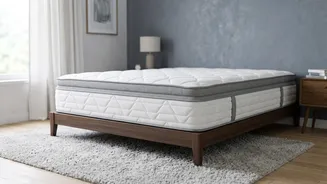







Choosing a new spring mattress can feel overwhelming. With endless options and technical jargon, it's easy to get lost. This guide simplifies the process, focusing on the three things that matter most: support, firmness, and your personal sleep style.
The Heart of the Mattress: Understanding Coils
The core of any spring mattress is its coil system, which provides the foundational support. There are four main types. Bonnell coils are the oldest and most common in budget mattresses; they are hourglass-shaped and interconnected, which means they move as a single unit. Offset coils are similar but have squared edges that hinge, allowing for better contouring to your body. Continuous wire systems are made from a single, long piece of wire, offering durability but limited motion isolation. Finally, pocketed coils are individually wrapped in fabric, allowing them to move independently. This makes them excellent at reducing motion transfer (great for couples) and providing targeted support.
Support and Firmness: A Crucial Distinction
Many people use the terms 'support' and 'firmness' interchangeably, but they refer to two different things. Support is the mattress's ability to keep your spine in a neutral alignment, distributing your weight evenly and preventing sagging. This comes from the mattress's core, like the coil system. Firmness, on the other hand, is the immediate feeling you get when you lie down—how soft or hard the surface feels. This is determined by the upper comfort layers. A mattress can be very soft and plush but still be highly supportive, just as a very firm mattress might fail to provide proper support.
How to Choose Your Firmness Level
Firmness is subjective and is often rated on a scale from 1 (softest) to 10 (firmest). Your ideal level depends heavily on your body weight and personal preference. Lighter individuals may find a medium or firm mattress feels too hard, while heavier individuals may sink too deeply into a soft one. As a general rule, a medium-firm feel (around 5-7 out of 10) suits the widest range of people. However, the goal is to find a balance where your body is cushioned comfortably without sacrificing the underlying support that keeps your spine aligned.
Matching Your Mattress to Your Sleep Position
Your primary sleeping position is one of the most important factors in your decision. Side sleepers typically need a softer to medium-firm mattress that can cushion the shoulders and hips, allowing these pressure points to sink in slightly while maintaining spinal alignment. Back sleepers generally benefit from a medium-firm to firm surface that supports the natural curve of the lower back and prevents the pelvis from sinking too deep. Stomach sleepers require the firmest support of all to keep their hips elevated and prevent the spine from arching into an unnatural 'U' shape, which can cause back pain.
Beyond the Springs: Comfort and Other Factors
While coils provide support, the layers on top—made of materials like memory foam, latex, or polyfoam—determine the ultimate comfort and feel. These layers offer pressure relief and contouring. Also consider practicalities like coil gauge, which is the thickness of the wire. A lower gauge number means a thicker, more durable wire and a firmer feel. Don't get too caught up in coil count; the type and quality of the coils are more important. Finally, look for brands that offer an in-home trial period of at least 30 nights, which gives you time to truly assess if the mattress is right for you.