


More Than Just a Walk
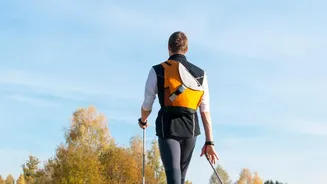
So, what exactly is Nordic walking? Originating in Finland as a summer training method for cross-country skiers, it's a full-body workout that uses specially designed poles to engage the upper body while walking. Unlike regular walking which primarily
uses muscles in the lower body, Nordic walking incorporates your arms, shoulders, chest, and core. This turns a simple walk into a more comprehensive exercise, engaging up to 90% of your body's muscles and burning significantly more calories—up to 46% more than walking without poles.
The Full-Body Benefits
The appeal of Nordic walking lies in its powerful combination of low impact and high reward. The poles help distribute your weight, reducing the stress on your knees, hips, and feet, which makes it an excellent choice for all ages and fitness levels. Regular practice can lead to improved cardiovascular health, better posture, and increased muscle strength. Studies have shown it can reduce fat mass, lower 'bad' LDL cholesterol, and even decrease feelings of depression and anxiety. It provides a vigorous workout that is gentler on the joints than running, making it a sustainable long-term fitness solution.
Getting the Right Gear
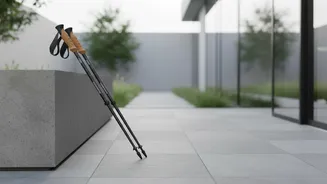
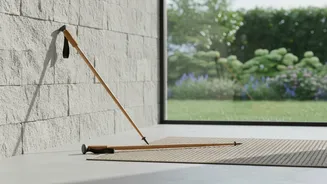
While it doesn't require a lot of equipment, having the correct poles is essential. It's important to note that Nordic walking poles are different from trekking or hiking poles, which are designed for stability rather than propulsion. Nordic poles come with a specific glove-like strap system that allows you to push off and propel yourself forward using an open-hand technique. The length is also critical; a common rule of thumb is to multiply your height in centimetres by 0.68. Poles that are too long can strain your shoulders, while poles that are too short can lead to poor posture. Investing in a good pair, ideally with some carbon content to absorb vibrations, will make a significant difference.
Mastering the Basic Technique
The fundamental movement mirrors natural walking: your opposite arm and leg move forward simultaneously (left leg with right arm, right leg with left arm). The key is to plant the pole between your front and back foot, keeping your arm extended and pushing backward to propel yourself forward. Maintain an upright posture, looking ahead rather than down. Avoid gripping the handles too tightly; the power comes from pushing through the strap. Many beginners make the mistake of planting the poles too far in front of them, which acts as a brake instead of a propeller.
Embrace the Gradual Pace
The most common mistake beginners make is trying to do too much, too soon. Your body needs time to adapt to the new movements, especially in the upper body muscles that are newly engaged. A sensible starting plan is to walk for 20-30 minutes, two to three times a week. During these initial sessions, focus on technique rather than speed. You could begin by using the poles for only a portion of your walk, gradually increasing the time as you become more comfortable. As your fitness improves, you can increase the duration, frequency, and intensity by incorporating gentle hills or short bursts of faster walking.