





What is the Tachocline?
Imagine two giant, spinning sections inside the Sun that rotate at different speeds. The inner part, the radiative zone, rotates like a solid ball. The outer layer, the convection zone, churns like boiling water, with its equator spinning faster than
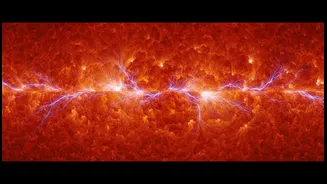
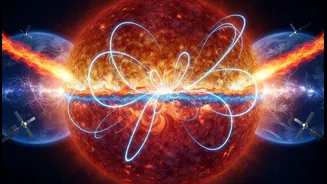
its poles. The tachocline is the incredibly thin but highly volatile boundary where these two zones meet and grind against each other. First theorised in 1992, this shear layer is only about 4% of the Sun's radius but is believed to be the birthplace of the Sun's powerful magnetic field. This intense shearing action stretches and amplifies magnetic fields, a process fundamental to the solar dynamo theory.
The Sun's Magnetic Engine
The tachocline's primary role is in generating the solar magnetic field, the driver of nearly all solar activity we observe. This process, known as the solar dynamo, converts the kinetic energy of the Sun's rotation and convection into magnetic energy. The powerful shear within the tachocline winds up magnetic field lines, creating immense, rope-like structures of magnetic flux. When these magnetic ropes become unstable, they can rise through the convection zone and burst through the Sun's surface, or photosphere, creating sunspots. These sunspots are the visible markers of intense magnetic activity and are often the origin points for more violent solar events.
From Solar Flares to Geomagnetic Storms
When the tangled magnetic fields above sunspots suddenly snap and reconfigure, they release enormous amounts of energy in the form of solar flares and Coronal Mass Ejections (CMEs). A solar flare is an intense burst of radiation, while a CME is a massive eruption of plasma and magnetic field from the Sun's corona that travels through space. If a CME is aimed at Earth, it can trigger a geomagnetic storm by interacting with our planet's magnetic field. This interaction can induce powerful electrical currents in our magnetosphere and on the ground, posing a significant threat to modern technology. Understanding the tachocline is the first step in predicting when and where these magnetic instabilities might occur.
Forecasting for Satellites, Grids, and Astronauts
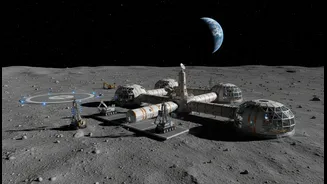
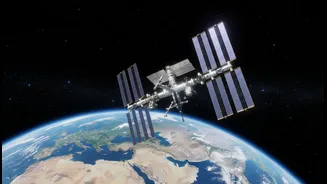
Improving space weather forecasts is crucial for mitigating risks. A severe solar storm can have devastating consequences. For satellites, it can damage electronics, degrade solar panels, and increase atmospheric drag, causing orbits to decay. On the ground, induced currents can overload transformers and destabilise electrical power grids, leading to widespread and long-lasting blackouts. Radio communications and GPS navigation can also be severely disrupted. For astronauts, especially those outside Earth's protective magnetic field on missions to the Moon or Mars, the radiation from a major solar event can be extremely hazardous, even lethal. By studying the tachocline, scientists hope to build more accurate models that can provide earlier warnings of potentially dangerous solar activity, giving operators time to protect vulnerable systems and personnel.
Why This Matters for India
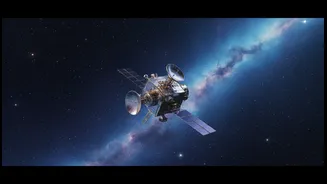
As a nation increasingly reliant on space technology, understanding space weather is a national priority for India. ISRO's Aditya-L1 mission, now orbiting at the L1 point between the Earth and Sun, is a testament to this focus. Aditya-L1 is dedicated to studying the Sun's atmosphere, solar magnetic storms, and their impact on the space environment around Earth. The data gathered helps protect India’s growing fleet of communication, navigation, and Earth observation satellites. Furthermore, it provides vital information for safeguarding our national power grid and communication networks from the disruptive effects of solar storms. Research into the Sun’s deep interior, including the tachocline, directly supports the objectives of missions like Aditya-L1, enhancing our ability to forecast and prepare for space weather events.