




Understanding the New Regulation
The US Commerce Department has introduced a rule that mandates American cloud computing providers to verify the identity of foreign customers who use their platforms to train powerful AI models. This move is designed to close a major loophole. Previously,
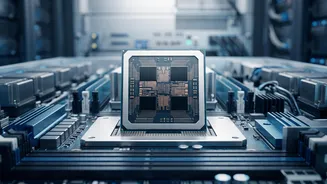
export controls focused on preventing the physical sale of high-end semiconductors and processing chips, primarily to China and other nations deemed a national security risk. However, foreign companies could still access that same computing power remotely by renting server space from US-based cloud giants like Amazon Web Services (AWS), Microsoft Azure, and Google Cloud. This new regulation effectively says that access to computing power is just as sensitive as owning the hardware itself.
Know Your Customer for the Cloud
At the heart of the new rule is a 'Know-Your-Customer' (KYC) requirement, a concept long familiar to the banking industry. Cloud service providers will now be legally obligated to determine whether a foreign entity is using their platform for training AI models that could have military or dual-use applications. The draft rules require these providers to obtain minimal identifying information from foreign resellers and users. If a provider knows or has reason to believe a foreign entity is developing large-scale AI models with potential national security implications, they must report it to the Commerce Department. This shifts a significant regulatory and due diligence burden onto the cloud companies themselves, forcing them to become gatekeepers of their own powerful infrastructure.
Who is the Primary Target?
While the regulation is written to apply broadly, its unspoken target is clearly China. The policy is a direct extension of the ongoing tech rivalry between Washington and Beijing. The US government is concerned that Chinese AI labs, unable to purchase advanced chips directly due to existing sanctions, are simply leasing cloud capacity to continue their work unabated. By monitoring and potentially restricting this access, the US aims to slow down China's progress in developing foundational AI models that could be used for military modernization, surveillance, or cyber warfare. However, the rule's wide net means that companies and researchers from many other countries could also face new scrutiny and administrative hurdles.
Implications for India and Global Tech
For India's burgeoning tech sector, the implications are complex. On one hand, Indian AI startups and research institutions that rely on US cloud services for their own model training may face new verification processes and potential delays. The administrative overhead for both the cloud providers and their customers will likely increase. On the other hand, it could create opportunities. As US cloud services become more regulated for certain types of AI development, some companies might seek alternative cloud providers in neutral or allied countries. This could potentially boost demand for Indian data centres and cloud infrastructure, provided they can offer comparable performance. However, the dominant position of AWS, Azure, and Google means that most of the global AI ecosystem will have no choice but to comply with these new American rules, making them a de facto global standard.
A New Front in the AI Race
This policy marks a fundamental shift in how governments view computing power. It is no longer just a commodity but a strategic asset that must be controlled. By regulating access to AI training capabilities through the cloud, the US is establishing a new front in its efforts to maintain a technological edge. The move signals that future regulations may focus less on physical hardware and more on the services and platforms that enable advanced technology. This will likely trigger a global conversation about data sovereignty, the neutrality of cloud platforms, and the 'weaponization' of digital infrastructure in geopolitical competition. The era of unrestricted global access to cutting-edge computing power appears to be drawing to a close.