


A New Map to Lunar Resources
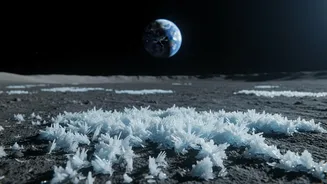
For decades, scientists have theorized that water ice could be trapped in the frigid, permanently shadowed craters of the Moon's poles. Orbital missions, including those by India's ISRO, have provided compelling evidence, but the data was often low-resolution.
The latest findings, derived from sophisticated neutron spectrometer systems, offer a much clearer picture. These instruments don't just suggest water is present; they are beginning to pinpoint its location and concentration with greater accuracy. This shifts the search from a broad exploration to a targeted hunt, identifying specific areas where water ice is likely mixed into the lunar soil, or regolith, at accessible depths. Getting this ground truth is crucial, moving beyond orbital data to give future missions precise locations to investigate.
Seeing Beneath the Surface with Neutrons
A neutron spectrometer doesn't 'see' water in the traditional sense. Instead, it detects hydrogen, the 'H' in H₂O. The Moon is constantly bombarded by high-energy cosmic rays from deep space, which collide with the lunar soil and send neutrons scattering. When these flying neutrons hit a hydrogen atom, which has a similar mass, they lose a significant amount of energy in a tell-tale way. The spectrometer measures the energy of neutrons escaping the lunar surface. A dip in the number of medium-energy neutrons is a strong indicator of a hydrogen-rich deposit below, likely in the form of water ice. This technology allows scientists to effectively peer up to three feet below the surface without ever drilling a hole, creating a detailed map of potential water reserves.
Why the South Pole Is the Prime Location
The Moon's axis is tilted by only 1.5 degrees, meaning some deep craters at the South Pole have not seen direct sunlight for billions of years. These 'permanently shadowed regions' are among the coldest places in our solar system, acting as perfect cold traps for water. Any water molecules from comet impacts or chemical processes that find their way into these craters are frozen in place, protected from being broken down by sunlight and lost to space. Recent research suggests the oldest of these shadowed craters are the most likely to contain significant ice deposits. This makes the South Pole the most promising real estate for establishing a foothold on the Moon, with both the resources and, on nearby crater rims, the consistent sunlight needed for solar power.
More Than Just a Drink of Water
Finding accessible water is a game-changer because it's the most critical resource for living off the land. The cost of launching materials from Earth is astronomical; a single gallon of water weighs over eight pounds, making large-scale transport financially unviable. Lunar ice can be melted for drinking water and to irrigate crops for food. More importantly, using electrolysis powered by solar panels, water (H₂O) can be split into its component parts: breathable oxygen for life support and hydrogen for rocket propellant. A lunar base that can generate its own air and fuel transforms from a temporary outpost dependent on Earth into a self-sustaining habitat and a potential refueling station for missions deeper into the solar system, such as to Mars.
The Next Resource Rush
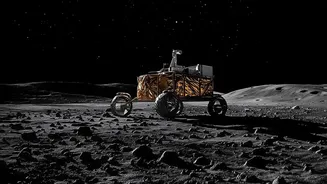
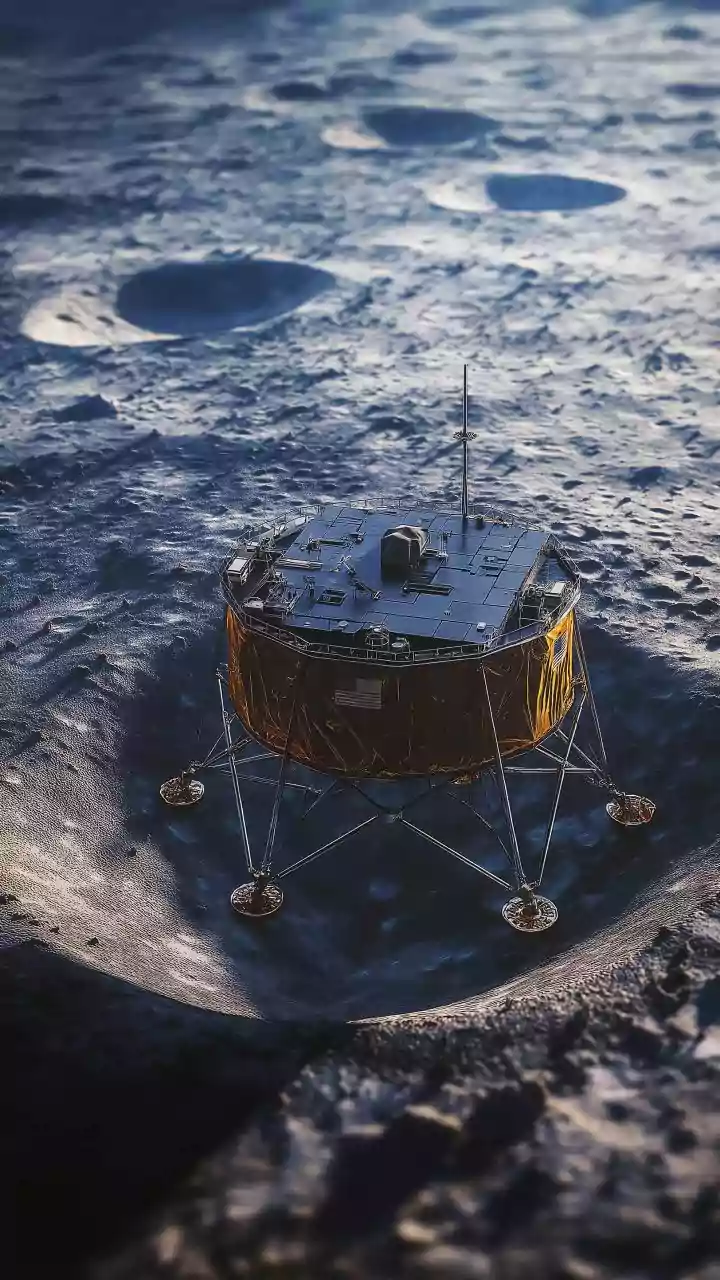
This new level of detail is set to accelerate the international and commercial race to the Moon. NASA's Neutron Spectrometer System (NSS) is a key instrument in this effort, developed in partnership with companies like Lockheed Martin. NASA is contributing this technology to the LUPEX mission, a joint rover project between Japan's JAXA and India's ISRO planned for launch no earlier than 2028, specifically to explore the South Pole for water. Pinpointing accessible reserves is the first step toward mining and utilization. As these maps become more refined, they will guide not only scientific missions like NASA's Artemis program but also the ambitions of private companies eager to build the infrastructure for a future lunar economy. The question of who owns and can exploit these resources remains a complex legal and ethical issue for the future.