



A Cosmic Lion's Roar
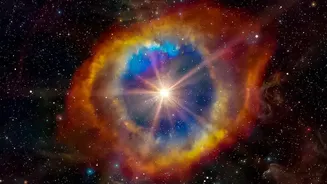
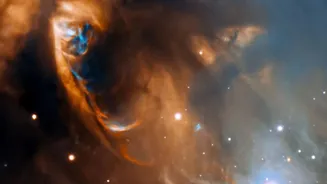
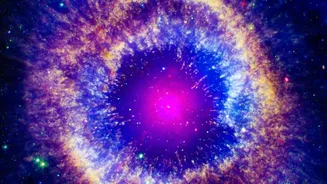
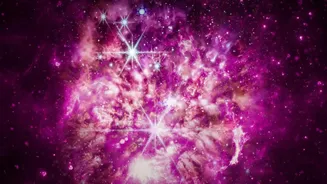
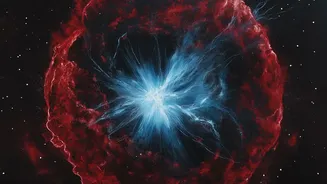
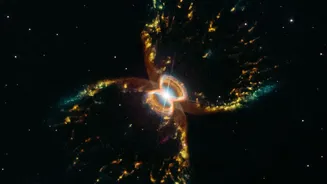
The subject of Webb's latest portrait is NGC 2392, a celestial object more commonly known as the Lion Nebula. Discovered centuries ago, it has long captivated astronomers with its distinct shape, which resembles the head and flowing mane of a lion. This
stunning structure isn't a nursery for new stars, but rather the beautiful remnants of a dying one. At its center sits a very hot, dense core called a white dwarf—the tiny remnant of a star that was once much like our own sun. This star has shed its outer layers over thousands of years, puffing them out into space to create what is known as a planetary nebula. The name is a historical misnomer; they have nothing to do with planets, but early astronomers thought their round shapes resembled them through small telescopes.
Seeing the Invisible
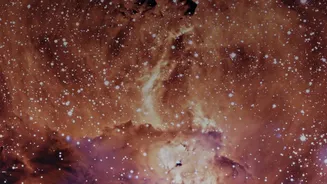
While the Hubble Space Telescope gave us memorable views of the Lion Nebula in visible light, Webb’s power lies in its ability to see the universe in infrared. This is a game-changer for objects like NGC 2392. Webb’s near- and mid-infrared instruments, NIRCam and MIRI, pierce through the cosmic dust to reveal what was previously hidden. The new images resolve the nebula's complex architecture with shocking clarity, showing dense clumps of surviving dust within the 'mane' and the hazy, cavernous bubble of superheated gas forming the 'face'. These infrared capabilities allow scientists to distinguish features that were blurred or invisible to Hubble, offering a much sharper, more detailed look at the forces sculpting this cosmic masterpiece.
An Archaeological Dig in Space
Beyond its sheer beauty, this unprecedented detail provides a wealth of new scientific information. The image is essentially a fossil record of the star's death throes. The intense radiation from the central white dwarf is blasting outward, carving and shaping the surrounding gas. Webb's view reveals how this powerful stellar wind interacts with the material the star ejected earlier in its life. Scientists can now study the intricate filament structures and dense globules of molecular hydrogen with stunning precision. Some features, like concentric arcs in the nebula’s outer regions, suggest the dying star may have had a low-mass companion star in a wide orbit, influencing the shape of the expanding shell. Studying this 'astronomical archaeology' helps astronomers refine their models of how stars evolve and die.
A Glimpse of Our Own Sun's Fate
Observing the Lion Nebula isn’t just about understanding a distant object; it’s also a preview of our own solar system's distant future. Most stars in the universe, including our sun, are not massive enough to explode in a violent supernova. Instead, in about five billion years, the sun will exhaust its nuclear fuel, swell into a red giant, and then gently puff its outer layers into space. The hot, tiny white dwarf left behind will illuminate this expanding shell of gas, creating our own planetary nebula. The stunning, fleeting beauty of the Lion Nebula—which astronomers estimate will dissipate in about 10,000 years—is a snapshot of the same process that will one day play out right here at home.