


The Moon's Brutal Power Problem
Anyone who has seen their car struggle on a cold winter morning understands a basic truth: batteries hate extreme temperatures. Now, imagine an environment where 'extreme' means plunging to minus 200 degrees Celsius at night and soaring to over 120 degrees Celsius during
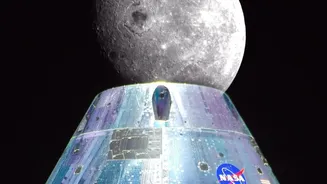
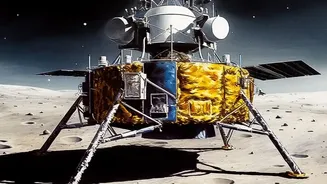
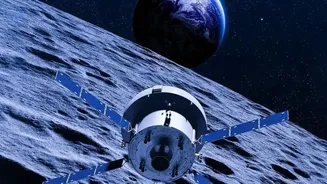
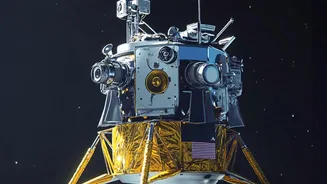
the day. That is the reality on the Moon, a world of blistering heat and deep-freeze cold with no atmosphere to moderate the temperature swings. For NASA's Artemis program, which aims to establish a sustained human presence on the lunar surface, this isn't just an inconvenience—it's a mission-critical obstacle. Future astronauts will need reliable power for everything from life support and scientific instruments to the rovers that will carry them across the surface. Conventional lithium-ion batteries, like those in our phones and electric cars, simply aren't built for this. Their liquid electrolytes can freeze, boil, or even evaporate in the vacuum of space, causing permanent damage and failure.
Introducing Project SPEARS
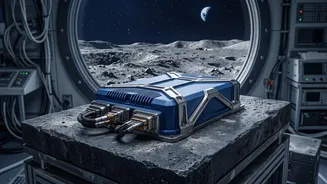
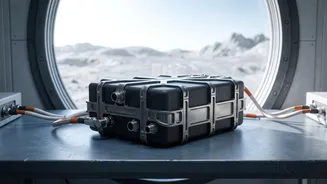
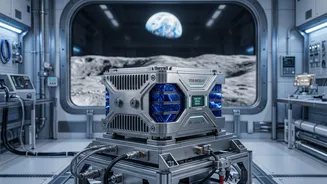
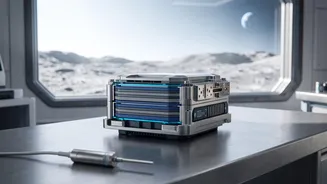
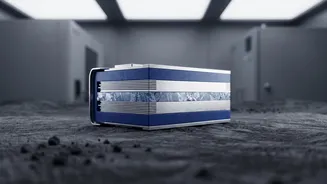
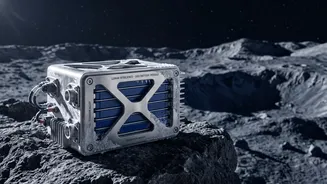
To solve this problem, NASA is developing a new generation of power storage under a project named SPEARS, which stands for Solid Power for Extreme Environment Adaptability and Resilience in Space. Led by NASA's Glenn Research Center, the project focuses on an emerging technology: solid-state batteries. The core innovation is replacing the volatile liquid electrolyte found in traditional batteries with a stable, solid material, such as a ceramic or a polymer. This simple change has profound implications. A solid electrolyte is not flammable, cannot freeze or leak, and is inherently more stable across a much wider temperature range. This makes it an ideal candidate for the harsh lunar environment, promising not only greater safety but also the potential for higher energy density—meaning more power in a lighter, smaller package.
Passing the Deep-Freeze Test
Recent tests conducted at NASA's Langley Research Center have provided the first strong evidence that the SPEARS concept works. Small, coin-sized prototype cells were subjected to a thermal vacuum chamber that simulates lunar conditions. The results were highly encouraging. The batteries operated well in a range from 80°C down to minus 60°C. Remarkably, they continued to function with slightly reduced performance even at a bone-chilling minus 80°C. In a separate and even more extreme test, the cells survived exposure to temperatures swinging from 100°C down to minus 170°C without sustaining any damage. This 'survival' aspect is crucial. While the batteries cannot generate power at the lowest lunar night temperatures, the fact that they don't break means they can be allowed to 'cold-soak' through the darkness. A small, efficient heater could then warm them to operating temperature when needed, saving huge amounts of energy compared to keeping a battery warm for two straight weeks.
The Road Ahead for Lunar Power
While the SPEARS project has achieved a major milestone, this is still the beginning of the journey. The successful tests were performed on small prototype cells, not a full-scale, flight-ready battery pack. The next steps involve scaling up the technology, integrating it with thermal management and control electronics, and proving its durability over thousands of charge and discharge cycles in punishing conditions. Researchers at NASA believe the technology is adaptable. By tweaking the chemistry of the electrodes and the solid electrolyte, batteries can be tuned for different applications—some for high power output for drills and rovers, others for long-duration energy storage for scientific outposts. This research is not just for the Moon. The insights gained from developing robust, high-performance solid-state batteries could eventually find their way back to Earth, influencing everything from electric vehicles to consumer electronics and grid-scale energy storage.