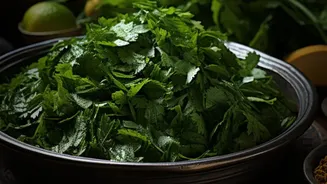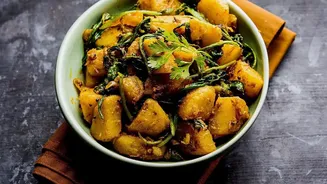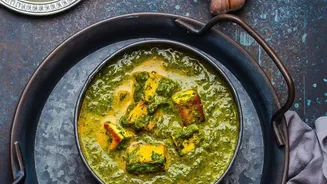




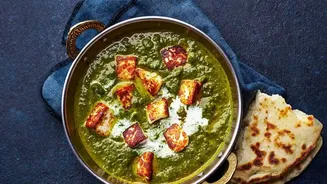

A warm bowl of saag is the ultimate comfort food, but it’s the dollop of shimmering ghee on top that truly makes it sing. This simple addition does more than add richness; it fundamentally transforms the dish in ways rooted in both science and tradition.
The Science of Flavour and Aroma
Ghee's primary role is as a flavour carrier. Many of the aromatic compounds in spices like cumin, garlic, and dried chillies—staples in a saag tadka—are fat-soluble, not water-soluble. This means they need fat to unlock their full potential. When spices are bloomed in hot ghee, their essential oils are released and distributed throughout the dish, creating a depth of flavour that water or a leaner cooking medium cannot achieve. Ghee also has a very high smoke point, around 250°C, which is much higher than butter (150°C). This allows you to temper spices at high heat without the fat burning and turning bitter, ensuring a clean, nutty aroma and taste that complements the earthy greens.
Creating a Velvety Texture
Beyond taste, ghee is a master of texture. Saag, a puree of leafy greens like mustard and spinach, can sometimes have a coarse or slightly watery consistency. Ghee works as an emulsifier, helping to bind the greens and any added liquid, transforming the dish's mouthfeel from rustic to luxuriously smooth and creamy. This fat coats the tongue, which can mute the perception of any bitterness from the mustard greens, resulting in a more balanced and palatable dish. The richness it provides also makes the meal more satisfying. A simple spoonful can make the saag feel more substantial and hearty, turning a humble preparation into a truly indulgent experience.
A Boost in Nutritional Value
Adding ghee is not just for flavour; it serves a nutritional purpose as well. Leafy greens are packed with fat-soluble vitamins, particularly vitamins A, D, E, and K. For your body to absorb these essential nutrients effectively, they need to be consumed with fat. A dollop of ghee on your saag ensures that you are getting the maximum nutritional benefit from the vegetables. Ghee itself is a source of these same vitamins, along with butyric acid, a short-chain fatty acid that supports gut health. While it is a saturated fat and should be consumed in moderation, its role in nutrient absorption is a key piece of traditional dietary wisdom.
A Tradition Steeped in Wellness
In India, ghee is more than just an ingredient; it's woven into the cultural and culinary fabric. For centuries, it has been a cornerstone of Ayurveda, where it is considered a 'sattvic' or pure food that promotes vitality and strength. Saag is traditionally a winter dish, a time when the body craves warming, energy-dense foods. Ghee provides this dense energy and is believed to have a warming effect, making the combination of saag and ghee a perfect pairing for colder months. This practice is not just about taste but about a holistic approach to eating that aligns with the seasons and the body's needs, a tradition passed down through generations.