







The End of the Metro Monopoly?
For years, India's aviation story was dominated by a handful of metro airports. Delhi's Indira Gandhi International Airport (IGIA) and Mumbai's Chhatrapati Shivaji Maharaj International Airport (CSMIA) have served as the primary funnels for the country's
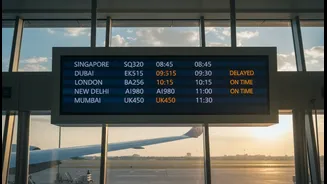
international passenger and cargo traffic. While essential, this hub-and-spoke model has led to significant challenges. Overcrowded terminals, congested airspace, and high operational costs have become common, creating frustrating bottlenecks for travellers and businesses alike. More than 90% of India's air cargo has traditionally been handled by just six major airports, putting immense pressure on these legacy hubs. This concentration has not only strained infrastructure but also limited economic growth opportunities to these metro regions, forcing passengers and cargo from the hinterland to make costly and time-consuming domestic connections.
Navi Mumbai: The Game-Changer Arrives
The Navi Mumbai International Airport (NMIA) represents the most significant challenge to this status quo. Developed to specifically alleviate the pressure on Mumbai's choked CSMIA, NMIA is more than just a second airport for the region; it's a strategic economic engine. International passenger and cargo operations are slated to begin from July 15, 2026, with carriers like Air India Express and IndiGo set to launch services. The inaugural international route will connect Navi Mumbai with Abu Dhabi. With an eventual planned capacity to handle 90 million passengers annually, nearly double that of CSMIA, NMIA is built for future demand. Its state-of-the-art cargo facilities and seamless multimodal connectivity, including metro lines and the Mumbai Trans-Harbour Sea Link, position it as a globally competitive logistics and travel hub from day one.
Indore's International Ascent
While Navi Mumbai illustrates the power of mega-projects, the growth of Indore's Devi Ahilya Bai Holkar Airport showcases another crucial trend: the rise of Tier-2 cities as direct international gateways. After a brief suspension, international flights from Indore are resuming on July 15, 2026, with a new Air India Express service to Abu Dhabi. This route is strategic, connecting central India not just to the UAE, but to a global hub with onward flights to over 80 cities in Europe and North America, bypassing the need for a layover in Delhi or Mumbai. This development reflects a broader shift where aspirational travellers and businesses in smaller cities are driving demand for direct overseas connections. Indore's airport is already undergoing expansion to handle growing traffic, with plans for a new terminal to increase annual capacity to 1 crore passengers, signalling its long-term ambitions.
A New Blueprint for Indian Aviation
Together, Navi Mumbai and Indore exemplify a fundamental restructuring of India's connection to the world. The model is shifting from an over-reliance on a few metro hubs to a more distributed, point-to-point network. Airlines are increasingly recognizing the untapped potential in regional markets and are launching direct international routes from cities like Bhopal, Coimbatore, and Jaipur. This decentralization empowers passengers with more choice and convenience, saving them time and money. For airlines, it opens up new revenue streams and allows them to deploy aircraft more efficiently. This trend is also supported by government policy, which aims to have over 200 operational airports by 2025, further enhancing regional connectivity.
The Ripple Effect on Regional Growth
The impact of these new international airports extends far beyond the runway. They are powerful catalysts for regional economic development. The presence of an international airport boosts trade, particularly for time-sensitive exports like pharmaceuticals and agricultural products. It attracts foreign investment and encourages multinational companies to set up offices, creating high-value jobs. The effect on real estate is transformative, with property values in areas surrounding new airports like Navi Mumbai seeing significant appreciation. Furthermore, improved connectivity makes regions more attractive for tourism, hospitality, and large-scale events, creating a virtuous cycle of growth that helps distribute economic progress more evenly across the country.