




Setting the Stage for a Safe Meeting
Before the first face-to-face interaction, preparation is everything. Your goal is to create a controlled, calm environment. For at least a week, keep the pets in separate rooms, allowing them to get used to each other's sounds and scents. You can swap
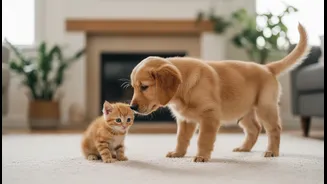
bedding or toys to help them become familiar with the other's smell. For the first meeting, choose a neutral space, keep your dog on a leash, and ensure the kitten has an easy escape route, like a high perch or piece of furniture to hide under. Keep initial meetings short and always end on a positive note, rewarding both animals for calm behavior.
Green Flags: Signs of Calm Curiosity
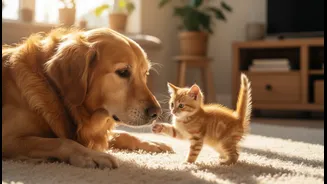
When your dog first sees the kitten, you want to see signs of relaxed curiosity. A loose, soft body posture is a great sign. Look for a gently wagging tail, with broad, relaxed sweeps, not a stiff, rapid vibration. Soft, relaxed eyes are also positive; your dog might look at the kitten and then look away, showing they aren't fixated. An open, relaxed mouth, perhaps with a slight pant, is another indicator of a low-stress state. A classic play bow—front end down, rear end up—is often a good sign, inviting the kitten to play. These behaviors suggest your dog is comfortable and not viewing the kitten as a threat.
Yellow Flags: Signs of Stress and Uncertainty
These are subtle signals that your dog is feeling uncomfortable or anxious. If you spot these, it’s time to slow down or end the session. Common stress signals include lip licking, frequent yawning when not tired, and panting when it isn't hot. A dog that avoids eye contact or repeatedly turns its head away is trying to communicate discomfort. A tucked tail or lowered body posture also indicates fear or anxiety. These are not aggressive signs, but they show the interaction is becoming too much for your dog. Ignoring these yellow flags can lead to escalation, so it's important to give your dog space and try again later when they are more relaxed.
Red Flags: Indicators of High Arousal or Aggression
Red flags are clear warnings to separate the animals immediately. A stiff, tense body is a primary indicator of trouble. A direct, hard stare or glare, where the dog is fixated on the kitten and cannot be easily distracted, is a significant danger sign. This is sometimes associated with a high prey drive. A stiff, high tail that is either still or vibrating rapidly is a sign of high arousal, not friendliness. Growling, snarling, or baring teeth are obvious warnings to back off. Lunging or snapping, even if it doesn't make contact, means the situation is unsafe and requires immediate intervention. Do not punish a growl; it is an important communication tool that warns you before a bite might occur.
Understanding Vocalizations and Stares
Not all sounds are created equal. High-pitched, excited barking might just be excitement, but it can still be overwhelming for a small kitten. A low, rumbling growl, however, is a clear distance-increasing signal. Whining can indicate frustration or anxiety. The most concerning signal is a silent, intense stare. This fixed gaze often precedes a chase or lunge and is part of the predatory sequence. If your dog is staring intently, stiffens, and seems deaf to your commands, their prey drive may have been triggered. It is crucial to break this focus immediately and create distance between the animals.