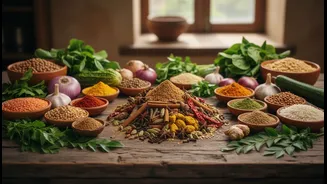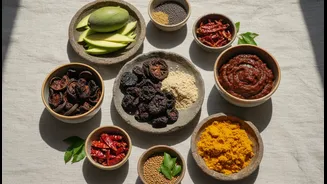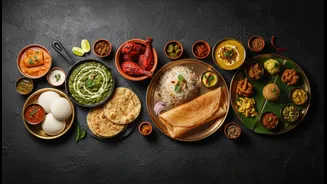









The Vibrant Pulse of the Coastline
The long Indian coastline, stretching through regions like Konkan, Malabar, and Coromandel, offers a cuisine that is fast, fresh, and vibrant. Life here moves with the tide, and so does the food. The defining ingredients are a direct gift from the sea
and the tropical climate: fresh seafood, coconuts, and rice. Coastal cooking is often quick, aiming to preserve the delicate texture of fresh fish and prawns. Dishes are built on a trinity of sour, spicy, and sweet, achieved through tamarind, chillies, and coconut in its many forms—milk, grated, or oil. Think of a Goan fish curry, tangy with vinegar, or a creamy Malabar prawn curry, where coconut milk balances the heat of the spices. The aroma of curry leaves sizzling in oil is an unmistakable signature, creating food that feels indulgent without being heavy. This is a cuisine that satisfies but doesn't slow you down, perfectly reflecting the energetic pace of coastal life.
The Hearty Soul of the Highlands
In stark contrast, the Himalayan regions of Himachal, Uttarakhand, and Ladakh offer a cuisine shaped by scarcity and the need for warmth. Here, the rhythm is slower, more deliberate, and focused on sustenance through harsh winters. With limited fresh produce at high altitudes, preservation techniques like drying and fermenting are crucial. The food is hearty, wholesome, and designed to provide energy. Staple ingredients include hardy grains like buckwheat, barley, and millet, which are used to make breads and porridges. Lentils, beans, and sturdy meats like mutton are slow-cooked for hours to create rich, warming stews. Dishes like the Himachali 'Dhaam', a complete meal featuring dals and rajma, or the Tibetan-influenced 'Thukpa', a nourishing noodle soup, are perfect examples. Spices are used for their warming properties, with ginger, garlic, and unique local herbs like Timur (Sichuan peppercorn) providing flavour and heat. This is a cuisine of patience and comfort, a warm hug in a bowl meant to be savoured slowly.
The Robust Cadence of the Deccan
Stretching across the heart of peninsular India, the Deccan Plateau has a culinary rhythm that is robust and earthy. This semi-arid region, covering parts of Maharashtra, Karnataka, and Telangana, bridges the gap between north and south. The cuisine is defined by resilient crops that thrive in its climate, such as jowar (sorghum) and bajra (pearl millet), which are used to make traditional flatbreads called bhakri. Peanuts, sesame seeds, and dried coconut are used extensively to add richness and texture. Deccani food is known for its complex spice blends and a distinct sourness, often derived from tamarind. Maharashtrian cuisine offers dishes like 'pithla bhakri', a simple but flavourful gram flour curry. Further south, Hyderabadi cuisine, a legacy of the Nizams, presents a grand fusion of Mughal, Persian, and local traditions, epitomised by the world-famous biryani, known for its slow-cooking 'dum' technique. This is a cuisine of bold flavours, built on a foundation of grains and spices that reflect the region's hardy character.
A Symphony of Flavours
While each geography fosters a distinct culinary identity, they are all united by a shared Indian ethos of using fresh, seasonal, and local ingredients. Whether it’s the fresh catch from the Arabian Sea, foraged greens from the Himalayas, or millets from the plateau, the principle remains the same. The cooking techniques—from the quick tempering ('tadka') of spices in the south to the slow-cooking ('dum') methods of Hyderabad—are all designed to extract the maximum flavour from the ingredients at hand. These diverse rhythms at the table tell a larger story of adaptation, resourcefulness, and the deep connection between people and their environment. The coastal 'upkari', the mountain 'dhaam', and the plateau's 'pithla' are not just different dishes; they are different expressions of life, each with its own beautiful and delicious cadence.