


The Next Giant Leap: Gaganyaan
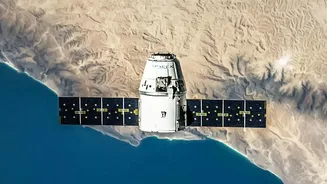
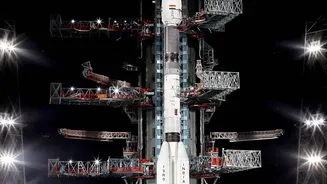
The centrepiece of ISRO's immediate future is the Gaganyaan mission, India's quest to send astronauts into orbit. This historic endeavour will make India only the fourth nation in the world to have an indigenous human spaceflight capability. While initial
timelines have shifted to ensure absolute safety, the first uncrewed test flight, G1, is anticipated in the latter half of 2026. These uncrewed missions are crucial for testing the human-rated launch vehicle, life support systems, and re-entry procedures. Four Indian Air Force pilots have been selected as the astronaut-designates for the program. Gaganyaan is more than a single mission; it is the foundation for a sustained Indian human presence in space, paving the way for more complex long-duration flights.
An Indian Address in Orbit
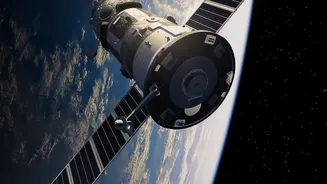
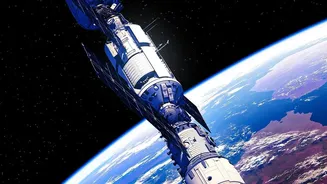
Building on Gaganyaan, ISRO has a grand vision for a permanent outpost in Low Earth Orbit: the Bharatiya Antariksha Station (BAS). This modular space station is planned to be fully operational by 2035. The first module is targeted for launch in 2028, with subsequent modules added over the following years. Once complete, the 52-tonne station will orbit at an altitude of about 400-450 km and host crews of 3-4 astronauts for months at a time. The BAS will serve as a crucial microgravity laboratory for scientific research in fields like biology and materials science, and will be a vital testbed for technologies needed for future interplanetary missions, including India's planned crewed lunar landing by 2040.
Return to the Moon, and Beyond
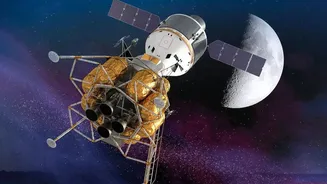
After the historic success of Chandrayaan-3, ISRO is upping the ante with Chandrayaan-4. This highly complex mission, targeted for 2028, aims to soft-land on the Moon, collect samples of lunar rock and soil, and return them to Earth. It is a multi-stage mission requiring two separate launches and the mastery of in-orbit docking, a first for ISRO. Success would place India in an elite club of nations that have retrieved lunar samples. This is a critical step in a broader lunar strategy that includes a collaboration with Japan's JAXA for the LUPEX mission to explore water ice at the lunar south pole and, ultimately, a crewed landing in 2040.
Exploring Our Planetary Neighbours
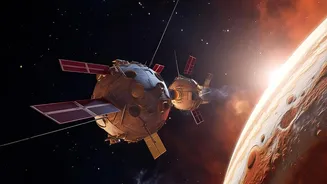
ISRO's ambitions also extend to our planetary neighbours, Venus and Mars. The Shukrayaan mission, an orbiter to study Venus, is now planned for a 2028 launch. This mission will investigate the planet's dense atmosphere and surface, providing valuable data about its runaway greenhouse effect. Following the success of the Mangalyaan orbiter, a more ambitious Mars Lander Mission (unofficially Mangalyaan-2) is in the works. This mission, likely launching closer to 2030, aims to go beyond just orbiting and attempt to land a craft on the Martian surface, potentially including a rover or helicopter. Landing on Mars is a significant technological challenge, and success would mark a major milestone for India's interplanetary program.
Building Cheaper, Smarter Rockets
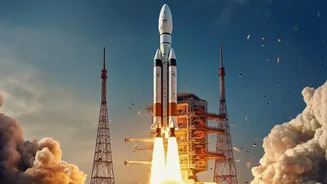
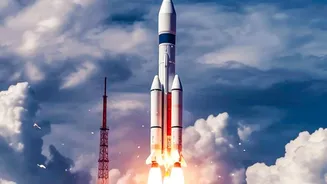
Underpinning all these ambitious missions is a revolution in launch technology. ISRO is aggressively pursuing reusable launch vehicles (RLVs) to dramatically reduce the cost of accessing space. The winged 'Pushpak' vehicle has already completed a series of successful autonomous landing tests (RLV-LEX), demonstrating its ability to land on a runway like an aircraft after being released from altitude. In parallel, ISRO is developing the Next Generation Launch Vehicle (NGLV), a powerful, partially reusable rocket designed to replace the PSLV and GSLV. Approved in 2024, the NGLV will be capable of carrying heavy payloads needed for the space station and deep space missions, making India's space future more sustainable and economically viable.