



Start with Fabric Weight
The most important rule for wearing a brooch is to ensure the fabric can support it. A heavy, ornate brooch will cause a lightweight silk or chiffon blouse to sag and may even damage the delicate fibres. Reserve your substantial, statement pieces for sturdier
materials like wool, tweed, denim, or a structured blazer. These fabrics can handle the weight without pulling or distorting the garment's shape. For lighter materials such as fine knits, cotton, or linen, opt for smaller, more delicate brooches made from lightweight materials. If you must pair a heavier brooch with a delicate fabric, you can add a small piece of felt or interfacing behind the cloth to help distribute the weight and prevent tearing.
Complement, Don't Compete
When your garment features embroidery, the goal is to choose a brooch that complements the existing design, not one that fights for attention. If the embroidery is dense, intricate, or colourful, select a simple, understated brooch. A minimalist metallic pin or a small pearl design can add a touch of elegance without overwhelming the detailed needlework. Conversely, if the embroidery is sparse or subtle—perhaps just on a collar or cuff—you have more freedom to choose a bolder, more elaborate brooch. In this case, the brooch can act as the main focal point, with the embroidery serving as a delicate frame. Think of it as a conversation; the brooch and the embroidery should enhance each other, not shout over one another.
Coordinate Colours and Metals
Creating a cohesive look often comes down to colour. Your brooch should either pick up a colour from the embroidery or contrast with it intentionally. For a harmonious feel, select a brooch with stones or enamel that match a secondary colour in the embroidered pattern. This creates a subtle, intentional link between the accessory and the garment. If you prefer a bolder statement, choose a brooch in a contrasting colour to make it pop. The same logic applies to metals. Warm metals like gold or bronze pair well with warm-toned embroidery (reds, oranges, browns), while cool metals like silver or platinum complement cool tones (blues, greens, purples).
Placement Is Paramount
Where you place your brooch can make all the difference, especially on an embroidered piece. The traditional placement is on the left side, near the collarbone. On a jacket with an embroidered lapel, consider pinning the brooch to the opposite, plain lapel to create balance. If a dress has embroidery on one side of the bodice, placing the brooch on the opposite shoulder can achieve a similar effect. Avoid pinning directly into embroidered sections, as this can damage the threadwork and make the area look cluttered. Instead, find a 'quiet' space on the garment where the brooch can shine without disrupting the detailed craftsmanship. A collar, pocket, or the waistline of a dress can be excellent alternative locations.
Consider Theme and Texture
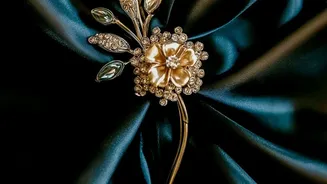
Beyond colour and size, consider the overall theme and texture of your look. If your jacket has floral embroidery, a nature-inspired brooch—like a leaf or a small bird—can create a lovely thematic connection. Similarly, match textures for a sophisticated touch. A soft, lustrous pearl brooch looks beautiful against a fuzzy wool or cashmere sweater, while a sleek, geometric metal brooch can complement the clean lines of a crisp cotton shirt. The key is to think about the overall mood you want to convey. A quirky, colourful enamel brooch might be perfect for a casual denim jacket with playful embroidery, while a classic crystal piece is better suited for a formal velvet blazer.