





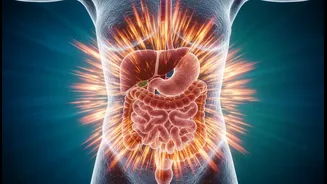



The Brain-Gut Connection
It all comes down to a crucial conversation between your brain and your stomach. When you eat, your digestive system releases hormones that signal fullness, or satiety, to your brain. Key players in this process include hormones like peptide YY (PYY)
and glucagon-like peptide-1 (GLP-1), which tell your brain you're full. However, this isn't an instant messaging service; it takes about 20 minutes for these signals to travel and be registered by your brain. When you eat quickly, you can easily consume more food than your body actually needs before your brain gets the message that it's time to stop. This biological delay is a primary reason why fast eaters often overeat.
Eating Speed and Body Weight
Numerous studies have highlighted a strong link between fast eating and a higher body mass index (BMI) and increased risk of obesity. Some research suggests that fast eaters can be up to twice as likely to be obese compared to their slower-eating counterparts. This happens because consistently overriding your body's fullness cues leads to a surplus of calories, which, over time, contributes to weight gain. One study in Japan following nearly 60,000 people found that individuals who ate slowly were 42% less likely to be obese compared to those who ate fast. Beyond just BMI, faster eating has also been linked to greater waist circumference and higher levels of visceral fat—the metabolically active fat stored around the organs.
More Than Just Weight Gain
The consequences of eating too quickly extend beyond the number on the scale. Rapid eating is associated with a higher risk of developing insulin resistance, a condition where your cells don't respond well to insulin, potentially leading to high blood sugar levels. This increases the risk for metabolic syndrome and type 2 diabetes. Some studies have found that fast eaters have a significantly higher chance of developing type 2 diabetes. Furthermore, wolfing down your food can lead to digestive issues. Swallowing larger, poorly chewed bites of food forces your stomach to work harder and can introduce excess air into your digestive system, causing discomfort, bloating, and indigestion.
Practical Tips to Slow Your Roll
The good news is that slowing down is a skill you can learn. It's about building new, more mindful habits. Start by setting aside dedicated time for your meals—aim for at least 20-30 minutes. Create a distraction-free environment by turning off the TV and putting your phone away. Pay attention to the act of eating itself. Try putting your utensils down between bites to create a natural pause. Focus on chewing your food more thoroughly; some experts suggest 15 to 30 chews per bite, depending on the food. Taking sips of water throughout your meal can also help you pace yourself and aid in digestion. If you're dining with others, try to match the pace of the slowest eater at the table.
Embracing Mindful Eating
Ultimately, slowing down is a core component of mindful eating. This practice isn't about restriction; it's about awareness. It encourages you to pay full attention to the experience of eating—noticing the colours, smells, textures, and flavours of your food. Studies show that mindful eating is associated with lower BMI and can help in managing weight by reducing behaviours like emotional eating and bingeing. By being present during your meals, you become more attuned to your body's hunger and fullness cues, which can improve your relationship with food and support long-term health goals. This shift in approach can make meals more satisfying and enjoyable, turning a simple habit change into a powerful tool for well-being.