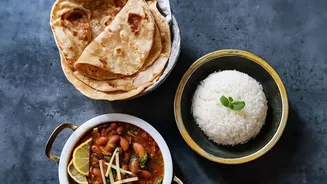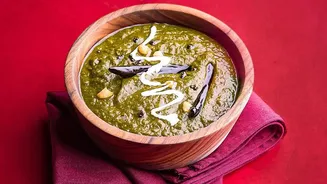



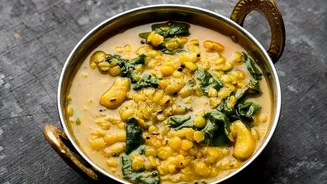
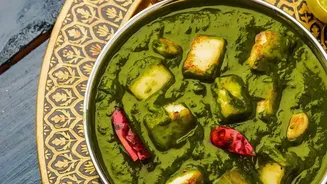
For many, the word 'saag' brings to mind a creamy, green curry, often assumed to be made just of spinach. But this beloved staple of Indian cuisine is far more diverse and fascinating than that single, popular image suggests.
So, What Exactly Is Saag?
At its heart, the term 'saag'
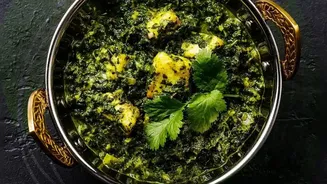
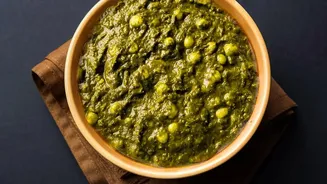
(derived from the Sanskrit word 'shaak') is a broad culinary category that simply means leafy greens. It doesn't refer to one specific vegetable but rather to a type of dish where greens are the star. So, while spinach (palak) can certainly be a type of saag, saag is not always spinach. Think of it as a technique as much as a recipe: a method of slow-cooking various greens with spices until they collapse into a flavourful, rustic mash. This approach has been a staple in rural parts of the Indian subcontinent for generations, making delicious use of abundant local greens.
A World of Greens Beyond Spinach
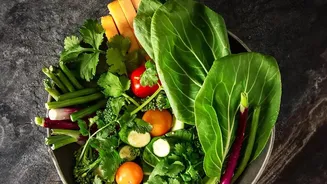
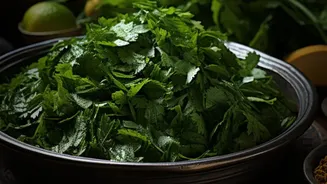
The true magic of saag lies in the variety of greens used, which changes based on region and season. While spinach is a common ingredient, traditional recipes often blend multiple greens to achieve a complex flavour. Key players include mustard greens (sarson), which have a distinctive peppery, pungent bite. To balance this sharpness, cooks often add milder, softer greens like bathua (chenopodium or goosefoot), fenugreek leaves (methi), and even tender radish greens (mooli ke patte). Other varieties enjoyed across India include amaranth leaves (chaulai or laal saag), water spinach (kalmi saag), and taro leaves (arbi saag). This blend is what gives many saag preparations their unique depth and earthy character.
The Undisputed King: Sarson ka Saag
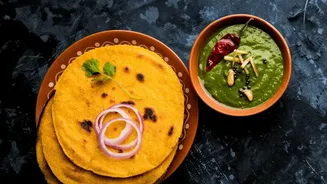
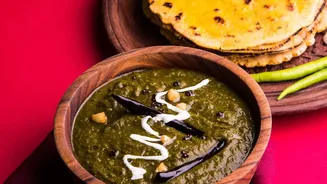
No discussion of saag is complete without mentioning Sarson ka Saag, the most iconic version of the dish, originating from the Punjab region. This winter delicacy is traditionally made from a base of mustard greens, softened with spinach and bathua. The greens are simmered for hours until they break down into a coarse, thick purée, often thickened with a bit of maize flour (makki ka atta). The dish is renowned for its robust flavour, a result of cooking with ginger, garlic, and green chillies, and is almost always finished with a generous dollop of ghee (clarified butter). It’s traditionally served with makki di roti, a flatbread made from maize flour, a pairing considered an inseparable duo in Punjabi cuisine.
How Saag Is Made
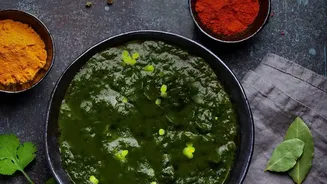
The preparation of saag is a labour of love, centered around slow cooking. The process typically begins with thoroughly washing and chopping a large volume of fresh greens. These greens are then simmered in a pot with water, ginger, garlic, and chillies until they become incredibly tender and collapse. The slow cooking is crucial; it helps break down the tough fibres in greens like mustard and melds the flavours together. Once cooked, the greens are traditionally mashed by hand or coarsely blended to retain some texture. A thickening agent like maize flour or gram flour is often stirred in to create a richer consistency. The final, essential step is the 'tarka' or tempering, where spices are bloomed in hot ghee and poured over the dish, adding a final layer of aromatic flavour.
Nutritious and Delicious
Beyond its comforting taste, saag is a nutritional powerhouse. Being composed entirely of leafy greens, it's naturally rich in vitamins and minerals. Mustard greens, a common base, are packed with Vitamins A, C, and K, along with essential minerals like calcium and iron. The high fibre content aids in digestion and promotes a feeling of fullness. The combination of various greens provides a wide spectrum of antioxidants, which are believed to support heart health and reduce inflammation. While traditional preparations can be rich due to the generous use of ghee, the base dish itself is low in calories, making it a wholesome and deeply nourishing meal.